Last updated November 22, 2026
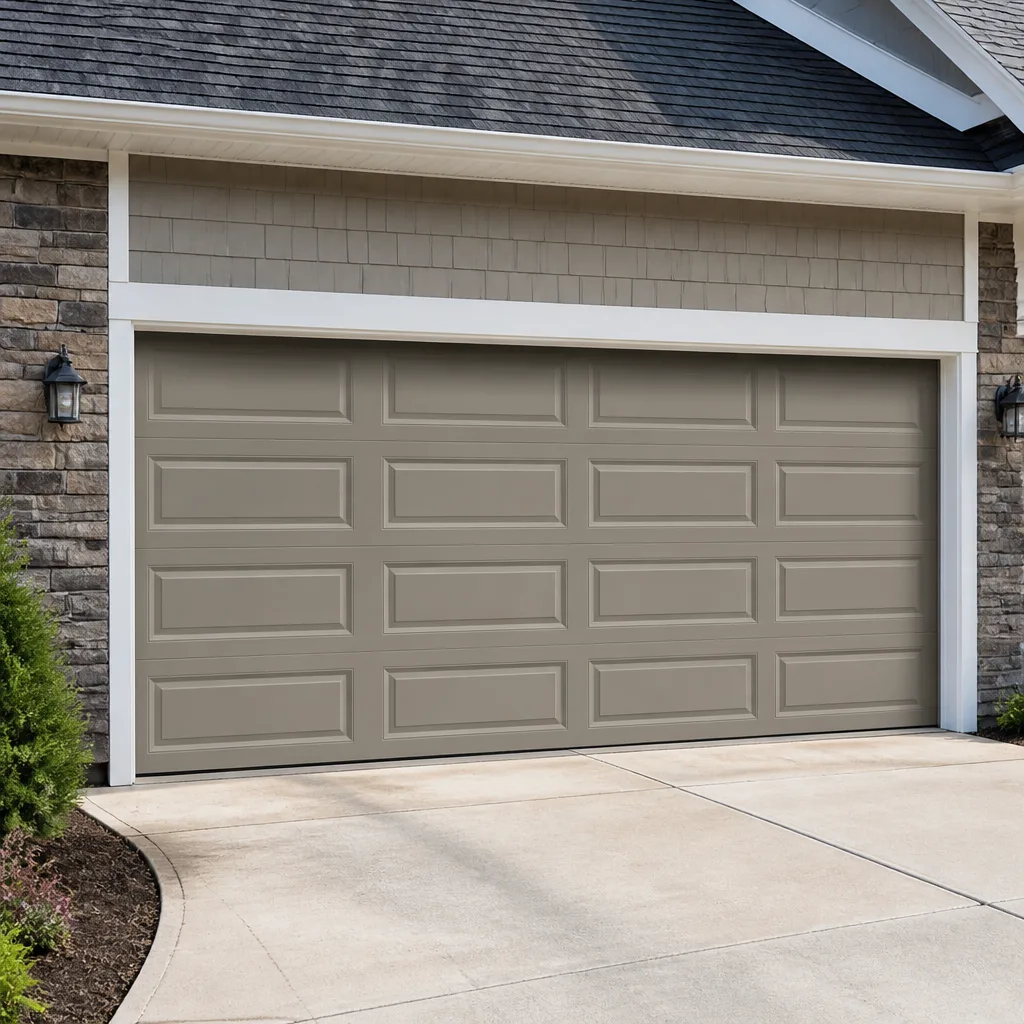 Raised-panel steel
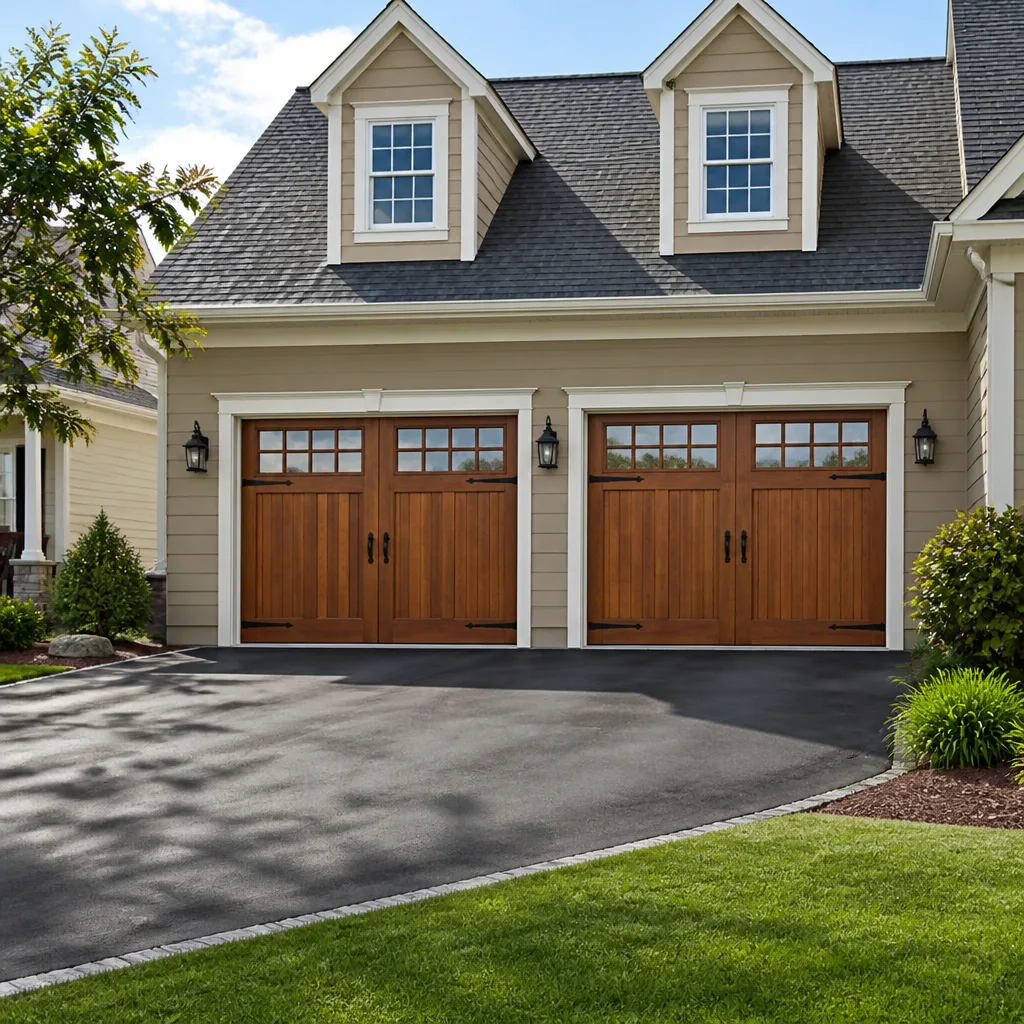 Carriage house
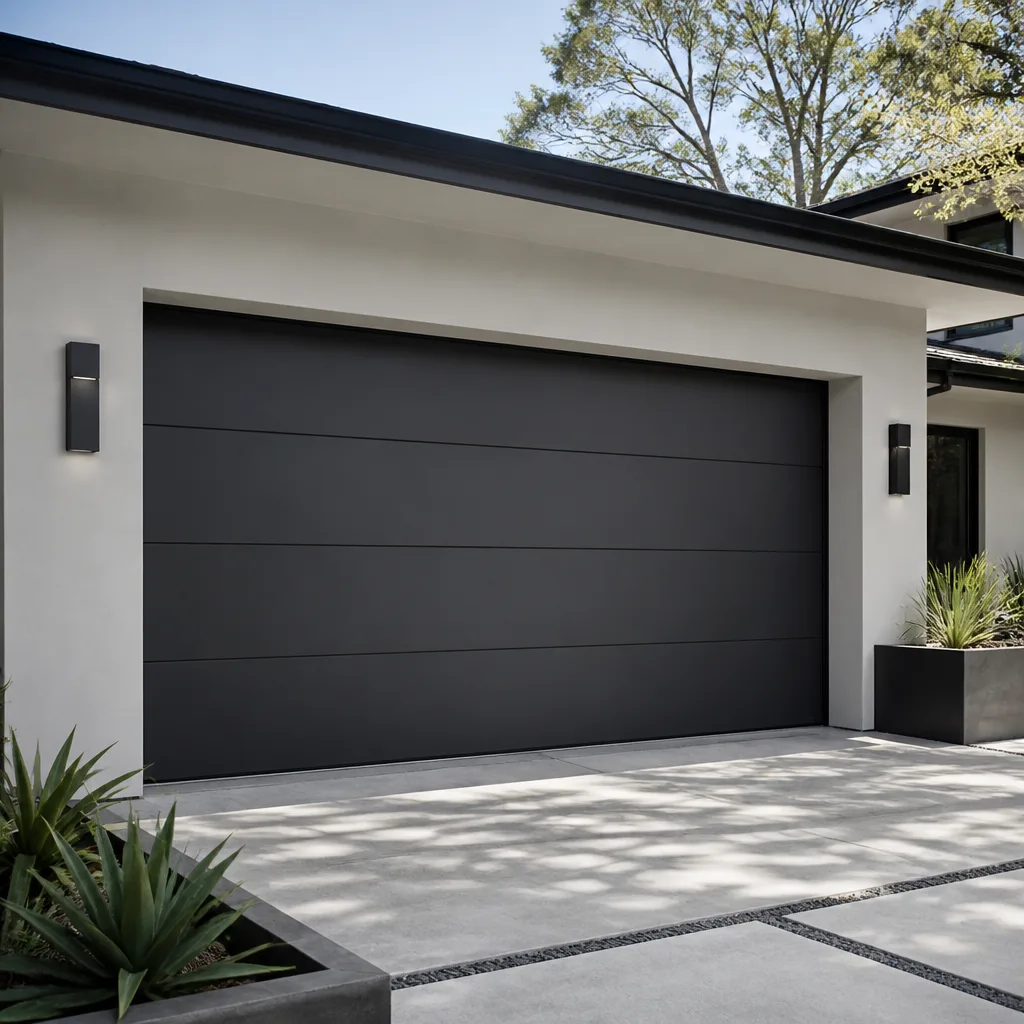 Modern flush
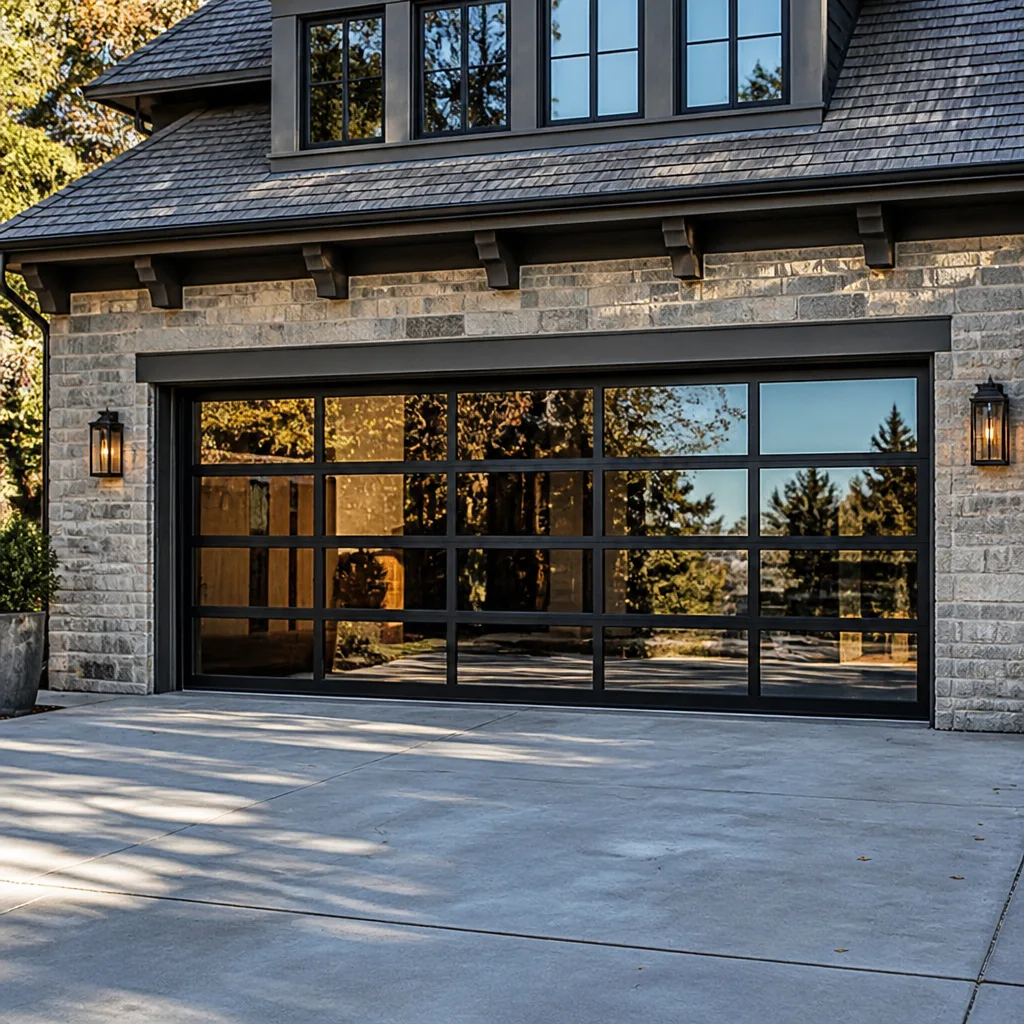 Full-view glass
 LiftMaster openers
 Chamberlain openers
Full 25-point door and opener safety check with every visit - springs, cables, rollers, tracks, and your LiftMaster or Chamberlain opener included
You get a price before we start. It does not change when the pro arrives.
Get your free estimateGarage Door Permits, Codes & Inspections in Boulder, CO: What You Need to Know
Most Boulder homeowners assume swapping a garage door is permit-free, and for a straight like-for-like replacement they’re usually right. The surprise comes later: widen the opening, frame in a new structural header, or upgrade to an opener with a battery backup, and you’ve crossed into work the City of Boulder wants to review before it’s covered up. Contractors don’t always mention that until you ask point-blank. This guide walks you through the actual decision points that determine whether a permit is required, how the Boulder permitting process works, what inspectors look for, and what happens when unpermitted work surfaces during a home sale. By the end you’ll know exactly which garage door projects in Boulder need paperwork and which don’t.
Quick Answer
A like-for-like garage door replacement in Boulder (same size, same opening, no structural changes) typically does not require a building permit. Projects that change the opening size, alter the structural header, add a new electrical circuit for an opener, or involve certain opener features do require a permit through the City of Boulder Building Services office. When in doubt, call the city’s building department directly and describe your project in plain terms before any work starts.
Styles & brands we work with
- Raised-panel steel
- Carriage house
- Modern flush
- Full-view glass
- LiftMaster openers
- Chamberlain openers
Table of Contents
- What Counts as “Like-for-Like” Replacement in Boulder?
- Boulder Permit Thresholds: Where the Line Actually Sits
- Wind Load and Seismic Bracing in Boulder’s Foothill Zones
- How the Boulder Permit Process Works
- What Inspectors Look For on a Garage Door Installation
- The Real Cost of Skipping a Permit
- How to Choose a Garage Door Contractor in Boulder
- Frequently Asked Questions
What Counts as “Like-for-Like” Replacement in Boulder?
A like-for-like replacement means the new door occupies the same opening, at the same width and height, with the same structural framing behind it, and no change to the electrical service feeding the opener. If that describes your project, you’re generally in permit-free territory. The moment any one of those variables shifts, the project changes character.
Here’s how the decision usually breaks down in practice:
- Same door, same opening, same opener wiring: No permit. This is the most common residential scenario, and it covers most standard replacements in neighborhoods like Table Mesa, Martin Acres, and Gunbarrel.
- Same opening, new opener on existing wiring: Usually no building permit, though you should confirm with the city if the opener adds a new circuit or a battery backup system.
- Wider or taller opening: Requires a permit. The header and jack studs carry load, and cutting into them is structural work.
- New structural header or reframing: Requires a permit and usually engineered specifications.
- Converting a garage to living space or changing the door to a wall: A separate, more involved permit.
- New construction or an addition that includes a garage door: Covered under the main building permit.
The trap most Boulder homeowners fall into is treating an opener upgrade as trivial. Adding a new opener with a battery backup, or replacing a legacy Craftsman unit with a modern smart-home-integrated LiftMaster or Chamberlain, can involve new wiring or a new dedicated circuit. Electrical work at that level usually triggers a permit, even when the door itself is untouched. If you’re only replacing a motor on the existing circuit, the picture is simpler, and that’s a job our garage door opener repair page covers in detail.
Boulder Permit Thresholds: Where the Line Actually Sits
Boulder follows the general principle that routine maintenance and like-for-like replacement are exempt, while structural, electrical, and dimensional changes are not. The exact threshold language lives in the city’s adopted building code, and it’s worth reading the current version directly or calling Building Services to confirm. What we can tell you is how the thresholds play out on real garage door projects.
Permit-free work (typically)
- Replacing a door panel or section with a matching part
- Replacing a torsion or extension spring with a matched pair of the same size and rating
- Replacing rollers, hinges, cables, or tracks with same-spec hardware
- Swapping a failed opener for a comparable unit on the existing circuit
- Routine adjustment and lubrication
Work that requires a permit
- Changing the width or height of the garage door opening
- Adding, removing, or modifying a structural header above the opening
- Installing a new dedicated electrical circuit for an opener
- Any door replacement that requires new framing or load-bearing changes
- Converting the garage to conditioned living space
Note the pattern: the permit is tied to the building and the electrical system, not to the door itself. New doors from Clopay, Amarr, or Wayne Dalton in a standard opening are a replacement. A new door that requires cutting a wider hole is construction. That distinction is the single most useful thing to understand before you call anyone.
Wind Load and Seismic Bracing in Boulder’s Foothill Zones
Garage doors are the largest moving assembly on a house and one of the weakest points in the building envelope under wind load. Boulder sits at the base of the foothills, and the wind patterns here are not gentle. Anyone who has lived through a spring along the western edge of town, up toward the Flatirons or out by Chautauqua, knows doors take real pressure. That’s why bracing and anchoring matter more here than in most of the country.
Wind load basics for a garage door
Wind load is the force a door resists when air pushes against it. Standard residential doors are rated for a baseline wind pressure, and doors installed in exposed foothill locations are often specified to a higher rating. The rating shows up in the door’s engineering documentation, not on the door itself. If your home sits in an area with heavy wind exposure, the door and its anchoring should be selected for that load, and a permit reviewer will typically want to see the door’s wind load rating in the submittal.
Seismic bracing
Boulder’s seismic risk is moderate, not extreme, but it’s not zero. Seismic bracing on a garage door means the anchoring, the track attachment, and the header connection are detailed to resist lateral movement during shaking. In a permitted installation, those details are part of what gets reviewed. In a like-for-like swap, you’re matching what’s already there, and if the existing bracing is deficient, that’s a conversation worth having with your installer.
What this means for you in plain terms: if your project requires a permit, the door’s wind load documentation and the anchoring details go into the submittal, and an inspector will check them. If your project doesn’t require one, you still want a door rated appropriately for your location. A qualified installer will handle that as part of the job.
How the Boulder Permit Process Works
The City of Boulder Building Services office handles residential building permits, including those tied to garage door openings and structural work. You can start the application online through the city’s permit portal or in person at the office. Electronic submission is the norm now and it’s the faster path.
The steps, in order
- Confirm whether your project needs a permit. Call Building Services and describe the work in plain language. Ask specifically about the door opening, the header, and any electrical changes.
- Gather your documents. For a garage door project that changes the opening, you’ll typically need a site plan or simple drawing showing the opening dimensions, the door product specification including wind load rating, and the framing details for the header.
- Submit the application. Online through the city portal is the standard route. Fee structure is set by the city’s current fee schedule and depends on the valuation and scope of the work.
- Plan review. Residential garage door projects that don’t involve structural engineering usually move through review within a few business days. Projects that change structure or require engineering take longer, and the current timeline varies with the city’s workload. Ask for the current estimate when you submit.
- Permit issued. Keep the approved set on site. Work doesn’t start until the permit is in hand.
- Inspection. Schedule the inspection once the door and any framing are installed. The inspector reviews the finished work against the approved plans.
- Final sign-off. You’ll get documentation that the work is permitted and passed. Keep it. This is the paper trail that matters at sale.
Fee amounts and review timelines shift year to year, and we don’t quote them here because the city’s current schedule is the only number that counts. Call Building Services for both. What we can say from experience: the process is straightforward when the submittal is complete and the door is properly specified. The delays we see come from incomplete applications, not from the review itself.
What about a Boulder County address outside city limits?
If your home is in unincorporated Boulder County, your permit comes from Boulder County rather than the city. The review path and inspection are separate. Confirm with whichever jurisdiction issues your address before you start. A quick call to the county planning office settles it.
What Inspectors Look For on a Garage Door Installation
Inspection is where the details of a permitted installation get tested. An inspector isn’t there to find fault in your taste; they’re confirming the work matches the approved plans and the safety requirements of the adopted code. Here’s what they actually check.
Header clearance and framing
The header above the door opening must be the size and configuration shown on the approved plans. If the plan calls for a doubled header or engineered lumber, the inspector wants to see it. Clearance between the top of the door and the header matters too. A door that rubs or scrapes against the header on its way up fails the check, and it’ll fail in daily use as well.
Spring containment hardware
Torsion springs are under extreme tension at all times. If a spring fails, the enclosed shaft and containment hardware are what keep the broken parts from becoming projectiles. An inspector will confirm that containment hardware is installed and that the springs are mounted correctly. This is the single most important safety detail on the door, and it’s also why spring work is not a homeowner job. Our garage door spring repair page explains why we treat that work as a specialty and never as a DIY project.
Opener auto-reverse compliance
Every residential garage door opener sold in the United States must include an auto-reverse feature (the door reverses when it meets an obstruction) and a non-contact safety reversing sensor near the floor. The inspector will test both. If the opener doesn’t reverse on contact or the sensor beam is missing or misaligned, the installation doesn’t pass, and the door isn’t safe to use. Modern openers from Genie, LiftMaster, and Chamberlain all include these systems, but the installation has to be done correctly for them to work. A legacy opener with a missing or bypassed sensor is a fail and a hazard.
Anchor and track attachment
Tracks anchor to the framing, and the anchoring has to match the plan. In a wind-exposed Boulder location, a slightly loose track is a real risk, especially during high-wind events. Inspectors check the anchor pattern, and so should you when the job is finished.
The Real Cost of Skipping a Permit
Unpermitted garage door work doesn’t usually cause a problem on the day it’s done. It surfaces later, typically during a home sale or a refinance appraisal, when a buyer’s inspector or the title company asks for proof that the work was permitted and inspected. That request is where remediation starts and stays, sometimes for weeks.
Where it shows up
- Home sale: A diligent buyer’s inspector will notice a garage door opening that doesn’t match the original construction documents. If the work was structural or changed the opening dimensions, the sale can stall while the seller goes through the permit process retroactively.
- Refinance and appraisal: Lenders and appraisers increasingly ask for documentation of recent alterations. Unpermitted work can complicate the appraisal.
- Insurance claims: If a door-related incident follows unpermitted work, an insurer can raise questions about whether the installation met code. Our advice is to keep that path closed by doing it right the first time.
- Future contractors: A legitimate installer will notice unpermitted work and will want to bring it into compliance before touching it.
What remediation looks like
Remediation means filing the permit after the fact, having the work inspected, and correcting anything that fails. In some cases the work has to be opened up so the inspector can see the framing and anchoring. The original installer is usually gone. The remediation costs are on the current owner, and the timeline runs on the city’s schedule, not yours. We’ve walked through this with more than one Boulder seller, and the cheaper path is almost always the original permit.
How to Choose a Garage Door Contractor in Boulder
The contractor you hire determines whether the permit question gets answered honestly and whether the installation passes inspection the first time. Here’s what to look for.
- Ask directly whether the project needs a permit. A competent contractor knows the answer or knows how to find it. If you get a vague “you don’t need one for this,” get that in writing.
- Confirm brand familiarity. Our technicians are factory-familiar with LiftMaster, Chamberlain, Genie, Clopay, Amarr, Wayne Dalton, Craftsman, and Raynor. Brand familiarity matters because each manufacturer has specific installation requirements for wind load, anchoring, and spring sizing. A generalist will install the door; a specialist installs it to the manufacturer’s spec.
- Ask about wind load documentation. If your project requires a permit, the contractor should be able to supply the door’s wind load rating from the manufacturer. If they can’t, find someone who can.
- Confirm the written estimate covers permit-related scope. The price you agree is the price you pay. If permit filing is included, it should be in the estimate. If it’s separate, know that before you sign.
- Ask who handles the inspection. A specialist should know the process and be able to walk you through it.
- Ask what happens if the door fails inspection. The right answer is that the contractor corrects it. Get that in writing.
The best protection against unpermitted work is an installer who knows the Boulder code environment and treats permits as part of the job when they apply. If you’re comparing contractors, that’s one of the first questions worth asking.
Common Mistakes to Avoid
- Assuming all replacements are permit-free. Like-for-like is permit-free; anything that changes the opening, the header, or the electrical circuit is not. Confirm the specific scope before you start.
- Treating a new opener as trivial. Adding a new dedicated circuit for an opener or a battery backup system can trigger a permit even when the door is untouched.
- Trusting a verbal “no permit needed” without checking the scope. A contractor who waves off the question on a structural change is a red flag. Get the scope in writing and confirm with the city if it involves the opening or the header.
- Skipping the wind load rating in exposed Boulder locations. Doors near the foothills and on exposed ridges should be specified for the wind load the location demands. A door rated for a gentler climate can fail under local gusts.
- Overlooking the spring containment hardware. Inspectors check it, and so should you. If the containment hardware is missing, the installation is incomplete even if the door opens and closes.
- Not keeping the final inspection documentation. When the sale comes, the signed permit and inspection record are what settle the question. Keep them with the title documents.
- Hiring a general handyman for structural or electrical scope. The scope determines the specialty. A garage door installation that changes the opening needs someone who knows building code and door-specific requirements, not a generalist who does doors on the side.
See the difference
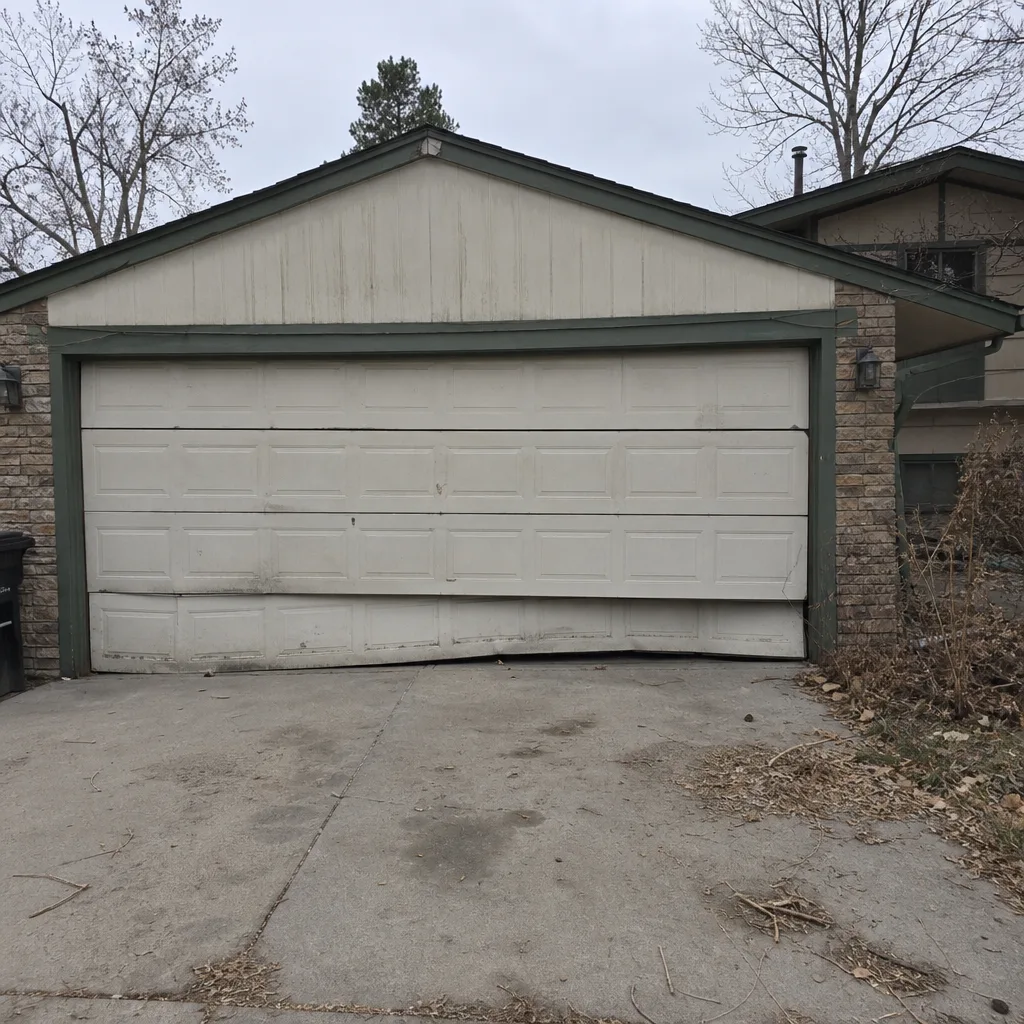 Before
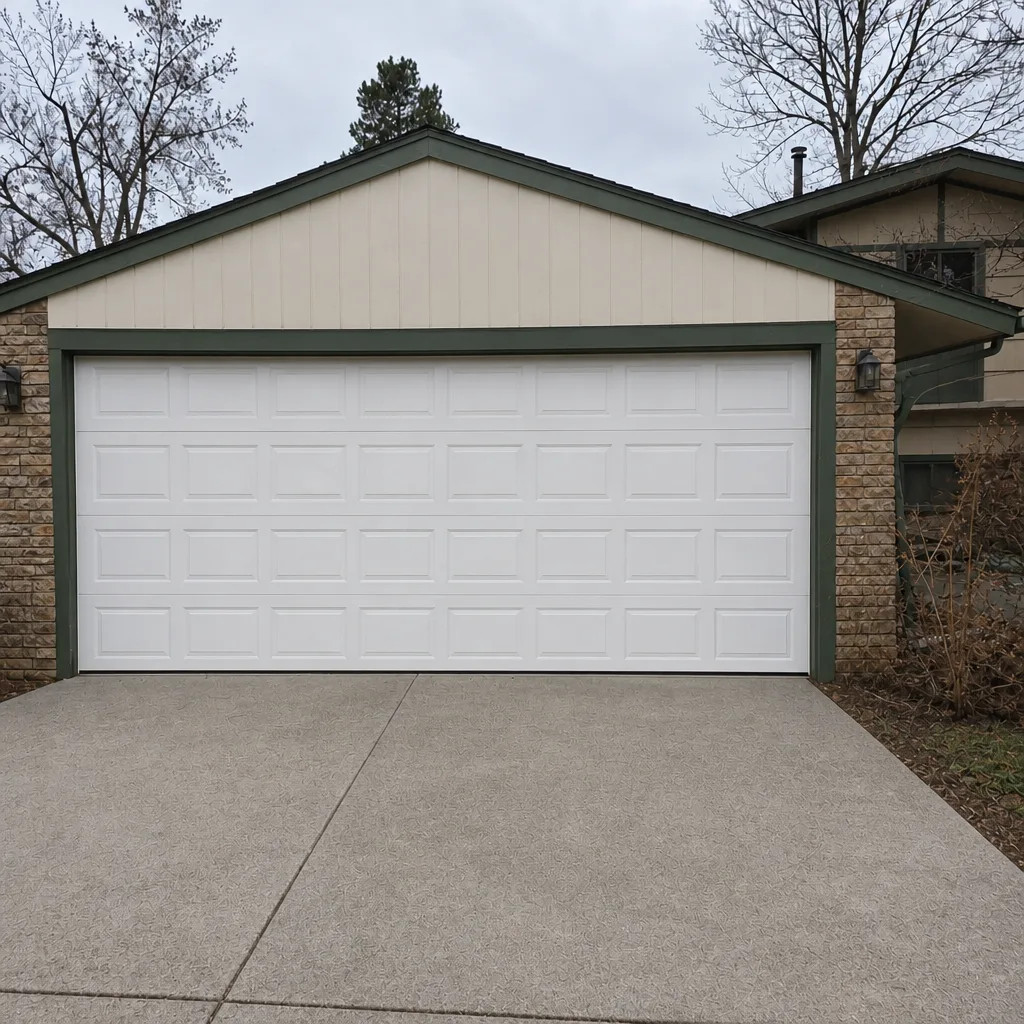 After
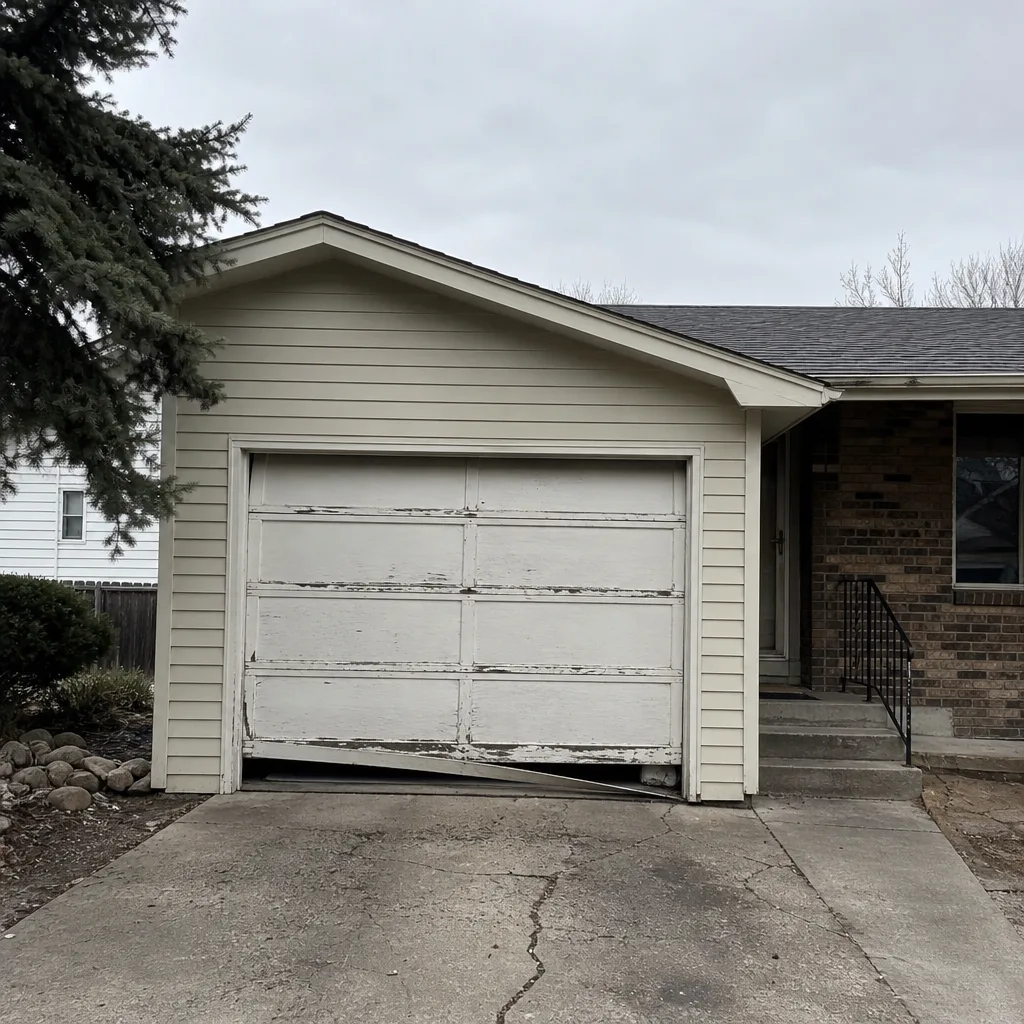 Before
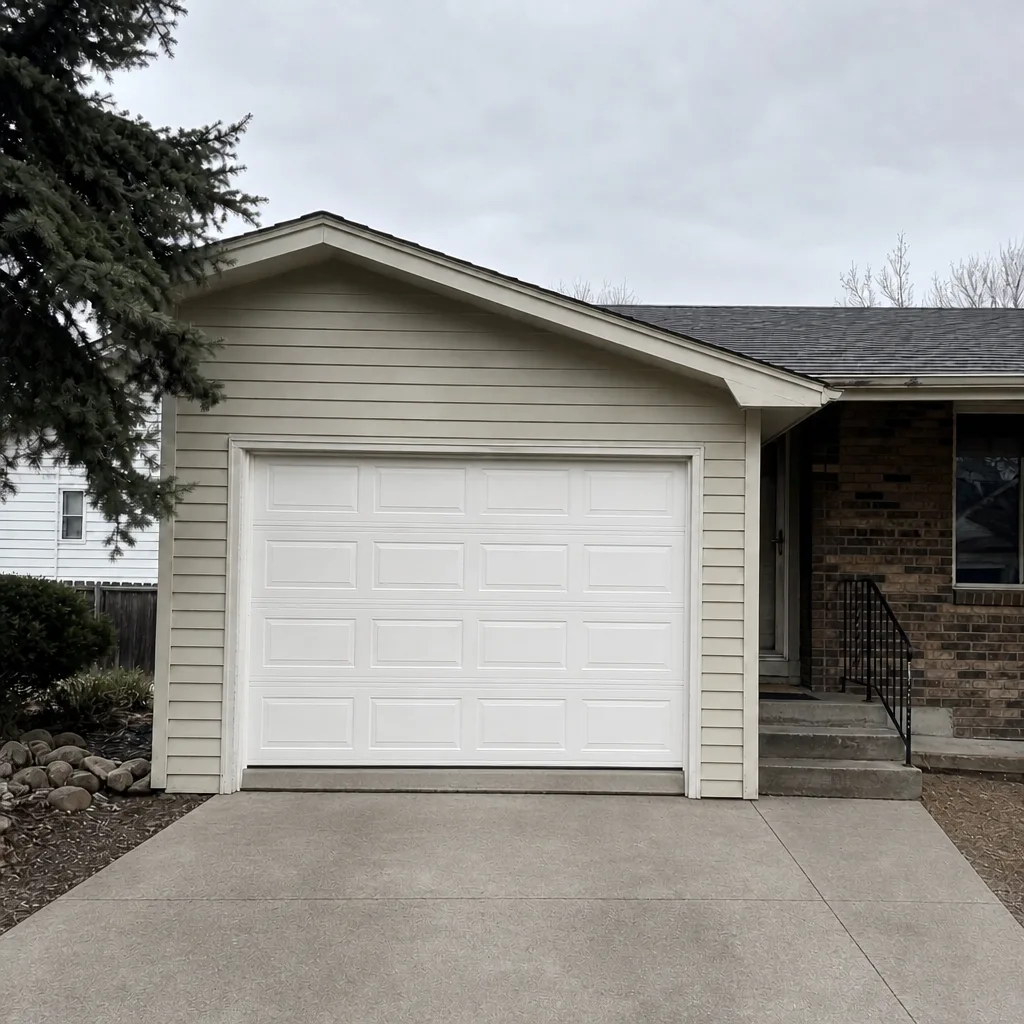 After
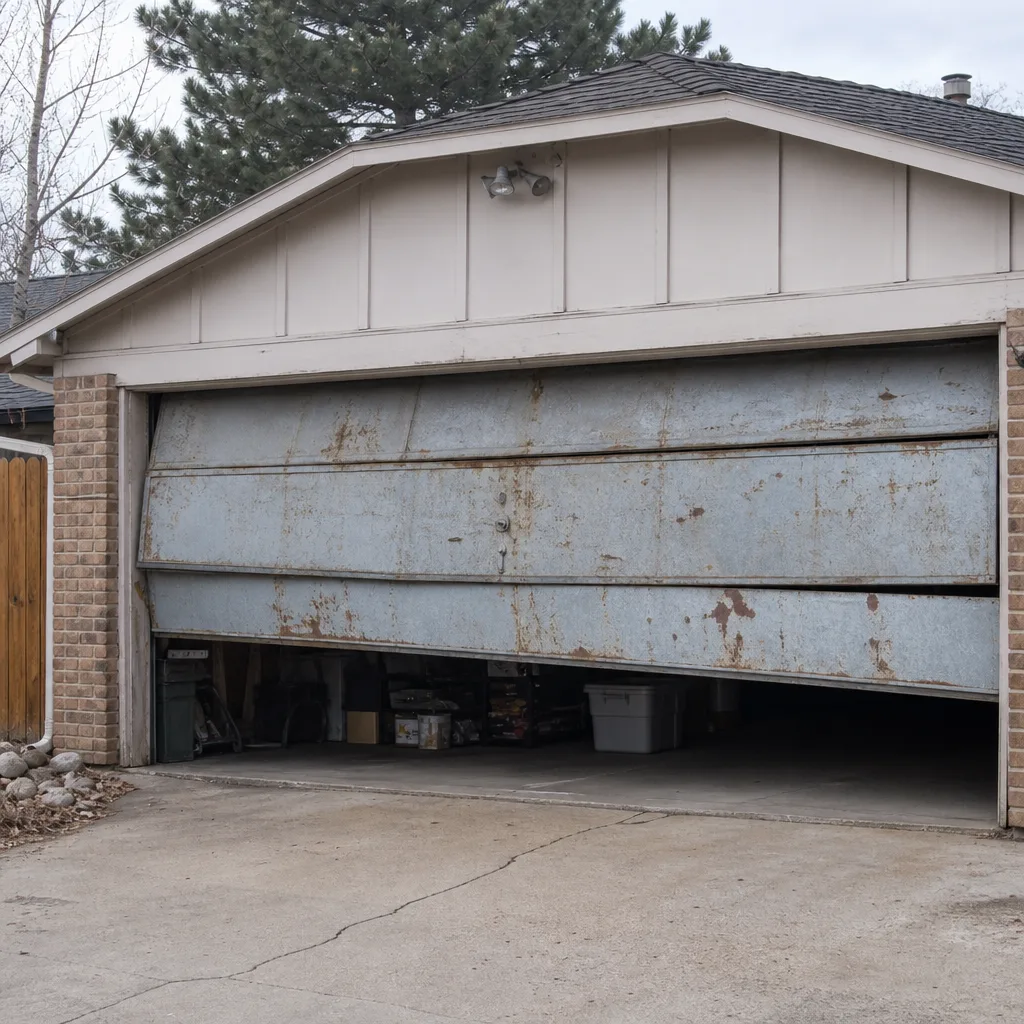 Before
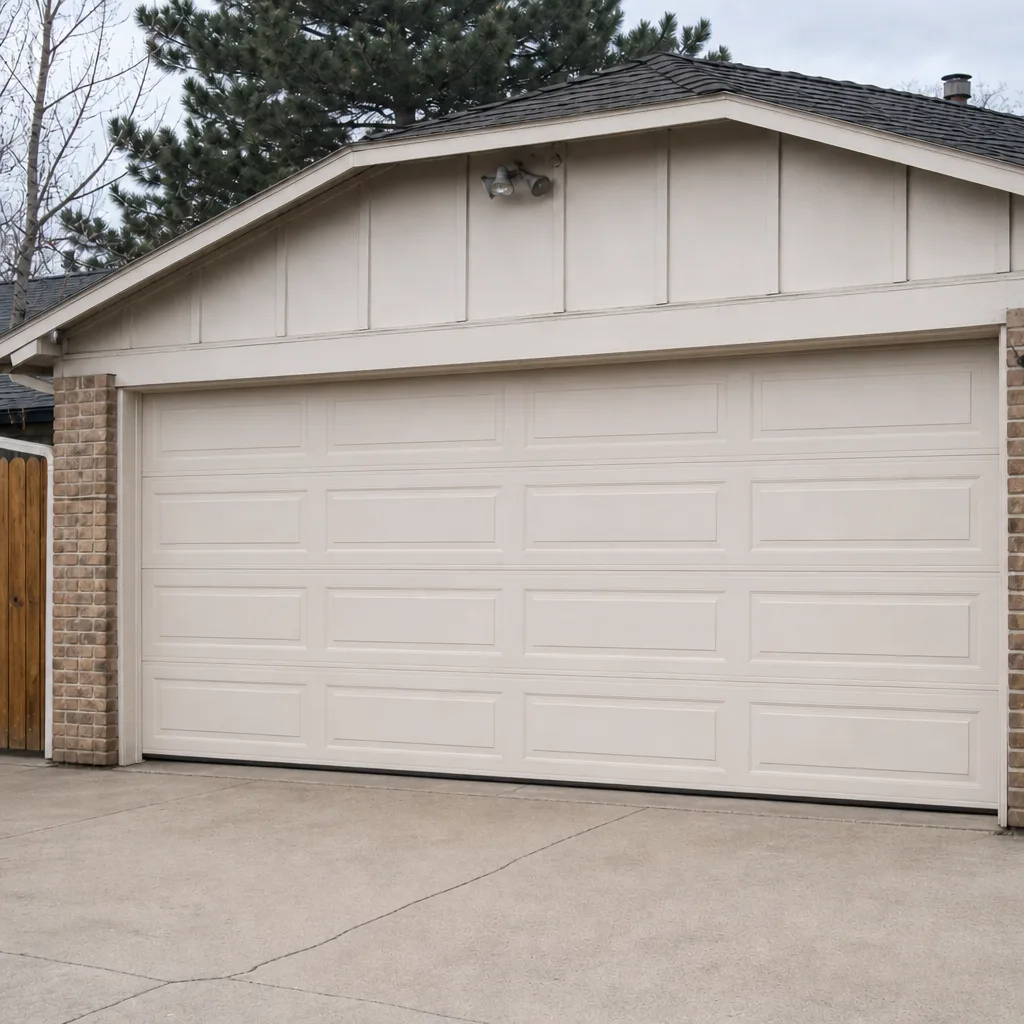 After
When to Call a Professional
Call us when your project involves any of the following: a door opening that will change size, a header or framing change, a new dedicated circuit for an opener, a door in an exposed foothill location that needs to be specified for local wind load, or a spring that needs replacement. Springs are the most dangerous component on any garage door. A torsion spring under tension can cause serious injury if it’s handled without proper tools and training. Our technicians have up to 11 years of experience, and spring work is a named specialty for us, not something we treat as routine. We also work on every major brand, so your door, your opener, and your springs are handled by one specialist rather than three. Boulder Garage Door Repair Pros offers free estimates in Boulder – call (855) 694-6347 to schedule a visit and get a written price before any work starts.
Frequently Asked Questions
In most cases, no. A like-for-like replacement (same opening size, same framing, same electrical circuit) doesn’t require a building permit in Boulder. You need a permit when the project changes the opening dimensions, alters the structural header, adds a new dedicated circuit for the opener, or involves converting the garage to new use. Call (855) 694-6347 if you want a second opinion before you file, and call Boulder Building Services directly to confirm your specific scope.
Replacing an opener on the existing circuit typically doesn’t require a building permit. If the installation adds a new electrical circuit or involves a battery backup system that changes the electrical service, a permit is usually required. Ask Building Services to confirm. Call (855) 694-6347 for a free estimate on the opener work itself.
The inspector checks header clearance, framing that matches the approved plans, spring containment hardware, opener auto-reverse function and non-contact safety sensors, and the anchor and track attachment. All of these are checked against the approved plans and the adopted code. If the door doesn’t pass, the contractor corrects it and the inspection is re-scheduled. Our garage door repair team can walk you through what your specific installation will be checked against.
The work typically surfaces during the buyer’s inspection or the lender’s appraisal, and the sale can be held up while the seller files the permit retroactively and gets the work inspected. The cost is on the seller and the timeline runs on the city’s schedule. Keep the original permit and inspection record and this problem never happens.
Fees are set by the City of Boulder’s current fee schedule and depend on the valuation and scope of the work. We don’t quote a number here because the schedule changes. Call Building Services for the current fee for your project. For the door installation itself, our written estimate is the price, and we provide it before any work starts. Call (855) 694-6347 for a free estimate.
The independent local professionals we connect you with are licensed and insured as Colorado requires. Our technicians have up to 11 years of experience and work on all major brands, including Clopay, Amarr, and Wayne Dalton, plus LiftMaster and Chamberlain openers. Every job is quoted and agreed in writing before any work starts. Call (855) 694-6347 for a free estimate in Boulder.
The Bottom Line
The permit question on a Boulder garage door comes down to one distinction: like-for-like replacement versus construction. Same door, same opening, same wiring, and you’re in the clear. Any of those variables changing, and you’re in permitted work. Springs and openers are the components that get underestimated, and they’re also the ones where safety and code compliance matter most. Keep your documentation, use a specialist who knows the local code environment, and get the scope in writing before you sign. If you’d rather have a specialist look at the project and tell you exactly what’s involved, our team at Boulder Garage Door Repair Pros is ready to help.
If you’re still deciding whether the work is repair or replacement, our garage door repair page covers the common failure points and when a fix is enough. And if your opener is the thing that’s acting up, the garage door opener repair team can diagnose it, whether it’s a legacy Craftsman or a modern smart-home unit.
Contact Us
Ready to sort out whether your garage door project needs a permit, or just want a straight answer on the work itself? Call (855) 694-6347 for a free estimate. We’ll walk your project through the Boulder code question, quote the work in writing, and get it done right the first time. From a broken spring to a full new door, your opener, your door, our specialty.
Written by the team at Boulder Garage Door Repair Pros.