Emergency Garage Door Repair Near Me: What Boulder Homeowners Should Do First
A garage door fails and most people do the same thing: they pull the red cord. That release handle hanging from the opener rail looks like the obvious first move, and on a door with a broken spring it’s the fastest way to turn a stuck door into a dangerous one. Here’s the short answer to “what do I do first?” Don’t touch anything until you know what failed. The next few minutes decide whether this stays a straightforward repair or becomes a much bigger problem.
If you’d rather not work through it yourself, call (855) 694-6347 and we’ll walk you through the safe next step.
The First Four Minutes After a Garage Door Fails
Assess before you act. The door isn’t moving for one of a few reasons, and your job in the first four minutes is to figure out which one without putting yourself in the path of a moving panel or a loaded spring.
Work through this in order:
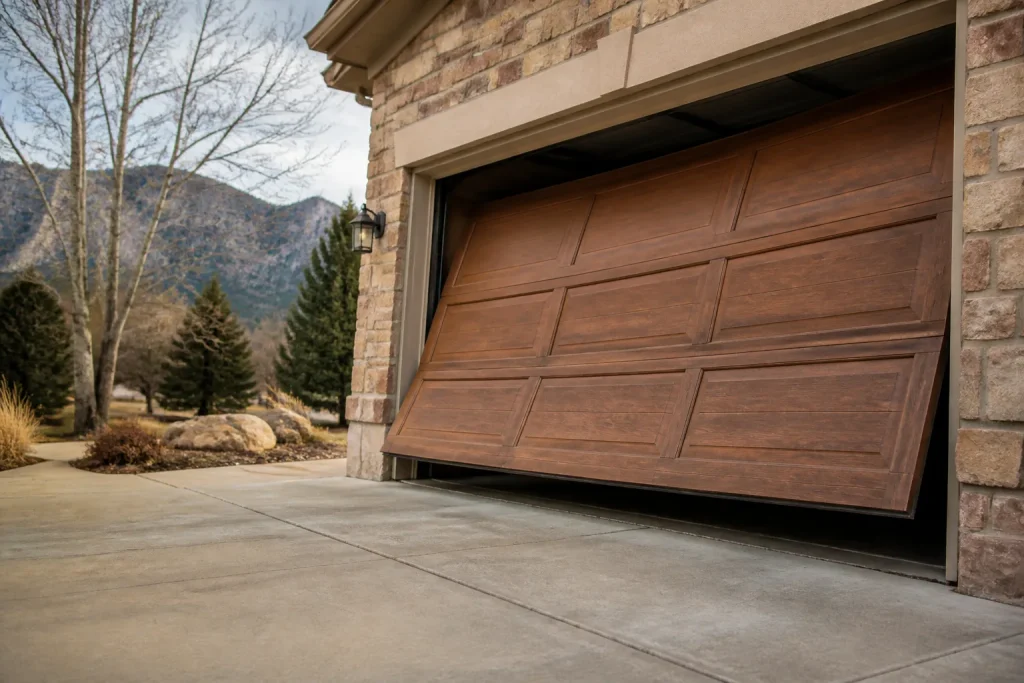
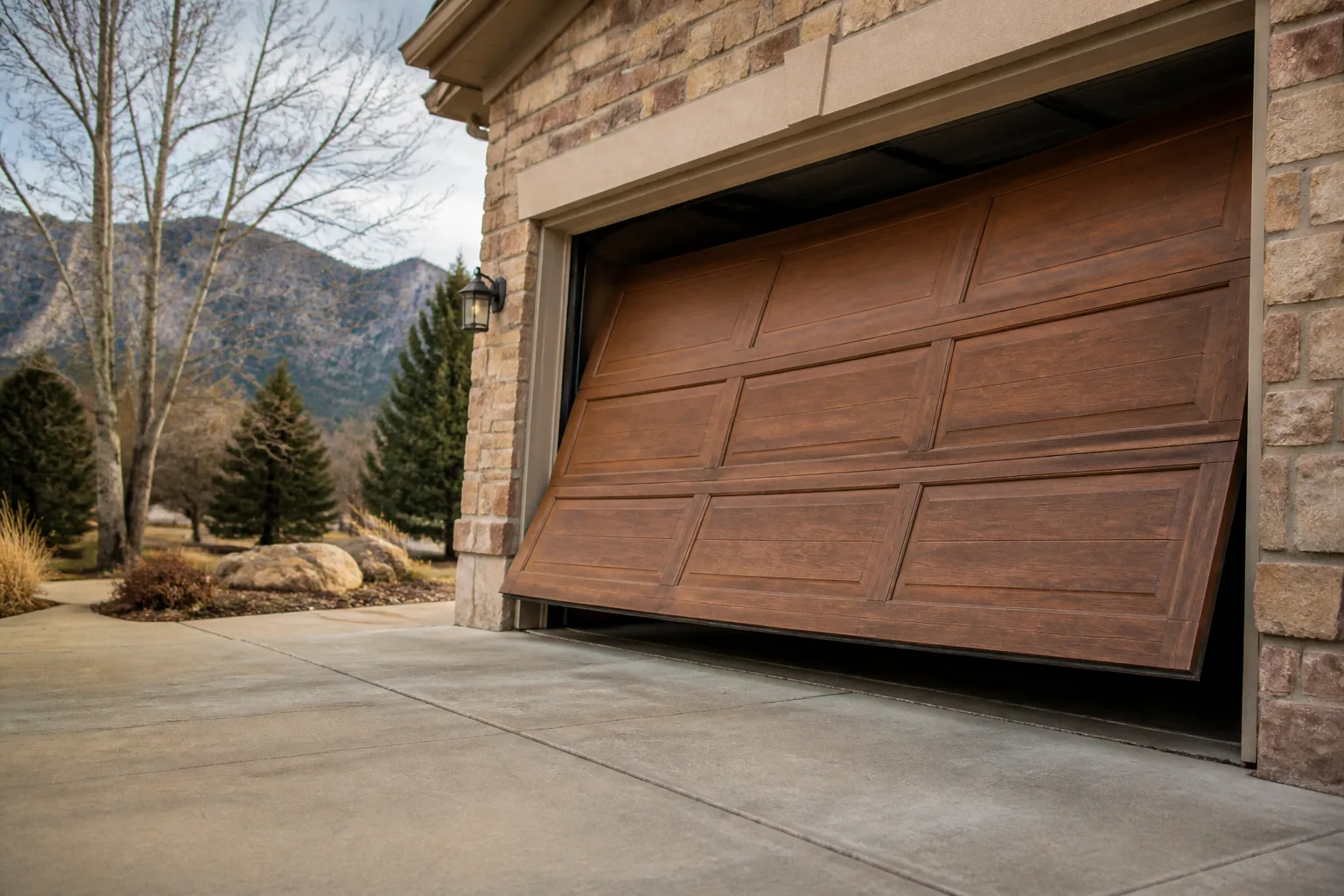
- Look at the door’s position. Fully open, fully closed, or stuck partway? A door frozen halfway is the one that needs action soonest, because a half-open door is an open invitation.
- Listen before you touch. A single loud bang followed by a dead door usually points to a torsion or extension spring letting go. A grinding or humming sound with no movement suggests the opener. Silence points to power or a tripped breaker.
- Look at the springs, don’t touch them. A torsion spring runs along the shaft above the door. An extension spring runs along the horizontal track on each side. A visible gap in either one means it’s broken. Stay clear.
- Check the opener. If you hear the motor but the door sits still, the issue may be the opener or its drive. If there’s no sound at all, check the wall switch and the breaker before assuming anything else.
- Do not pull the red release cord. More on this below, because it’s the single most common mistake we see.
That’s the whole assessment. In our experience, homeowners who run this quick check before calling describe the problem accurately, which means the technician arrives knowing what to expect. Dressed and diagnostic-ready, so to speak.
Why You Shouldn’t Pull the Red Release Cord on a Broken Spring
The red cord disconnects your door from the opener and hands its full weight to you. On a healthy door that’s a balancing act you can manage by hand. On a door with a broken spring, there’s no counterbalance left at all.
A typical residential door weighs somewhere in the range of a small motorcycle. Springs are what make that weight feel like nothing when you lift it. Snap one, and every pound of that door is suddenly yours to hold. People pull the cord, the door slams down, and a repair turns into a replacement plus whatever was parked underneath.
There’s a second reason, and it’s the one that matters for safety. Springs and the cables they tension are under enormous load. They’re the most dangerous components on the entire door, and they’re the reason we treat garage door spring repair as a dedicated specialty rather than a side task. A broken spring should be handled by someone with the right winding bars and the training to use them. That’s not a job anyone should learn in a dark garage at midnight.
So leave the release cord alone. If the door is stuck partway, don’t force it down and don’t try to lift it.
How Do You Secure a Garage Door That Won’t Close?
You secure it from the inside, with something that actually holds, and you keep the gap as small as you safely can. The goal is to make the opening hard to use without touching the door’s mechanism.
Options that work:
- Vise grips on the vertical track. Clamp a pair just above a roller on each side to stop the door from sliding down further. This is about limiting movement, not locking the door.
- A door brace or bar across the inside. A length of wood or a purpose-made brace set across the door’s interior, resting against the frame, resists an inward push.
- Move valuables and vehicles. If the door won’t secure, get what matters out of the garage rather than trusting a gap to stay closed.
Options that give false security:
- Wedging something under the door. A brick or a board under a partially open panel looks like it’s holding. It isn’t holding anything if someone leans on the door.
- Tying the door shut with cord or rope. It reads as secure and fails the moment it’s tested.
- Assuming the opener lock is engaged. If the opener has lost power or failed, its lock isn’t doing anything.
The honest rule for a door that won’t fully close: secure what you can from the inside, then get a specialist out. A gap in your garage wall is a gap until it’s fixed.
What Counts as a True After-Hours Garage Door Emergency in Boulder?
A true emergency is when the door’s failure is trapping someone, exposing the home, or creating a hazard that can’t wait. Everything else can be scheduled. Knowing which one you’re dealing with keeps you from paying emergency rates for a problem that would look the same in the morning.
These qualify:
- A vehicle trapped inside. If a broken spring or dead opener has your car pinned in the garage and you need it, that’s a real call.
- A door off its track. A panel that’s jumped the track can fall, and the gap it leaves is a security problem.
- Someone locked in or out. An opener failure that leaves a person stuck inside the garage or shut out of the house is urgent.
- A door stuck open or hanging. Exposure plus the risk of the door dropping makes this a same-day priority.
These can usually wait for business hours:
- A door that’s fully closed and simply won’t open. Annoying, not dangerous.
- A noisy opener or one that’s running slowly. It’s telling you something, but it’s not an emergency.
- A remote or wall switch that stopped working. Often a battery, a pairing issue, or a logic board, and none of those are urgent.
Boulder’s cold snaps are worth mentioning here because they change the math. On nights well below 20°F, lubricant thickens and metal contracts, and a door that’s stiff, slow, or groaning in the cold is often just cold. Before you call it in, cycle the opener once, wait, and try again. If it moves normally on the second or third try, you probably don’t have a failure. You have a temperature problem.
What to Ask Before You Commit to an Emergency Dispatch
Ask three questions before you hand over an address: who’s actually coming, what it will cost to find out, and whether the price is locked before work starts. The answers separate a local specialist from a call center routing your job to whoever’s available.
- “Is the person coming a local technician or a subcontracted third party?” National dispatch services take your call and hand the job to whichever contractor picks it up. You want to know who’s walking up your driveway and whether garage doors are their specialty or a sideline.
- “What’s the diagnostic or service call fee, and does it apply to the repair?” Get this in plain numbers before anyone is dispatched. It’s the difference between a quote and a surprise.
- “Will the price be quoted and agreed before any work starts?” This is the most important one. The written estimate is the price, and you should hear that in those words.
- “Do you work on my brand?” A specialist who knows Clopay, Amarr, Wayne Dalton, and Craftsman doors will diagnose brand-specific quirks instead of generic symptoms.
An emergency call doesn’t have to cost more than the same repair scheduled for the next morning, but it will if you skip these questions and let the first number you find make the decisions. Screening takes two minutes and saves real money.
When to Call a Pro Instead of Working Through It Yourself
Call a pro the moment the problem involves a spring, a cable, a door off-track, or anything that requires lifting the door by hand. Those are the parts that hurt people. If you’ve secured the opening and the door is stable, you can wait for a scheduled visit. If it isn’t stable, call now.
We work on your brand, whether it’s an older Craftsman opener most shops have stopped carrying parts for or a current LiftMaster or Chamberlain unit tied into a smart-home setup. We diagnose the actual failure instead of swapping parts until something works, and we’d rather tell you a cold-weather service call isn’t needed than charge for one. That’s the whole point of a specialist over a generalist: right the first time. From a broken spring to a full new door, it’s the same trade and the same set of hands.
Our technicians have up to 11 years of experience. If you need garage door repair in Boulder, we can get a trained eye on it and give you a clear answer on what it needs.
Related Services in Boulder
If your door is stuck because the motor has failed rather than a spring, garage door opener repair is the place to start. For the full range of what we handle, see Boulder Garage Door Repair Pros.
What happens when you call
- 1
A real person answersNo phone trees – you reach a local pro.
- 2
You get an upfront price rangeHonest numbers before anyone is dispatched.
- 3
A background-checked tech heads outLicensed & insured, dispatched right away.
- 4
You approve before work beginsNothing starts until you say go.
The Bottom Line
The emergency is often created in how you respond, not in the failure itself. Don’t pull the red cord. Don’t force the door. Figure out what failed, secure the opening, and call only when it’s a real emergency. Everything else gets fixed properly during business hours at a normal price.
If you’re in Boulder and need help, Boulder Garage Door Repair Pros offers free estimates – call (855) 694-6347. We’ll quote and agree the price before any work starts, so you know what you’re paying before a single tool comes out.
Frequently Asked Questions
It depends on what failed, but most emergency calls land in the same range as the repair itself, plus any after-hours service call fee, which should be quoted before dispatch. Spring replacement is typically the largest line item; opener and track issues run lower. Call (855) 694-6347 for an exact quote – estimates are free.
Yes. Emergency garage door service is a core offering for us, not an upsell, and urgent calls get the same technicians and the same skill set as a scheduled appointment. Call (855) 694-6347 and tell us what the door is doing.
No. The written estimate sets the final price, and it’s quoted and agreed before any work starts. If we open something up and find a bigger problem, we tell you and you decide before we continue. Call (855) 694-6347 for a free estimate.
Below about 20°F, lubricant thickens and metal contracts, which can make a healthy door feel stiff, slow, or noisy. Cycle the opener once, wait, and try again. If it moves normally the second or third time, it’s the cold, not a broken part. If it stays stuck, call (855) 694-6347.
Written by the team at Boulder Garage Door Repair Pros.
Need Garage Door Help?
Call Boulder Garage Door Repair Pros - the local pro we connect you with is licensed and insured, here with fast after-hours help in Boulder.
(855) 694-6347