Last updated November 22, 2026
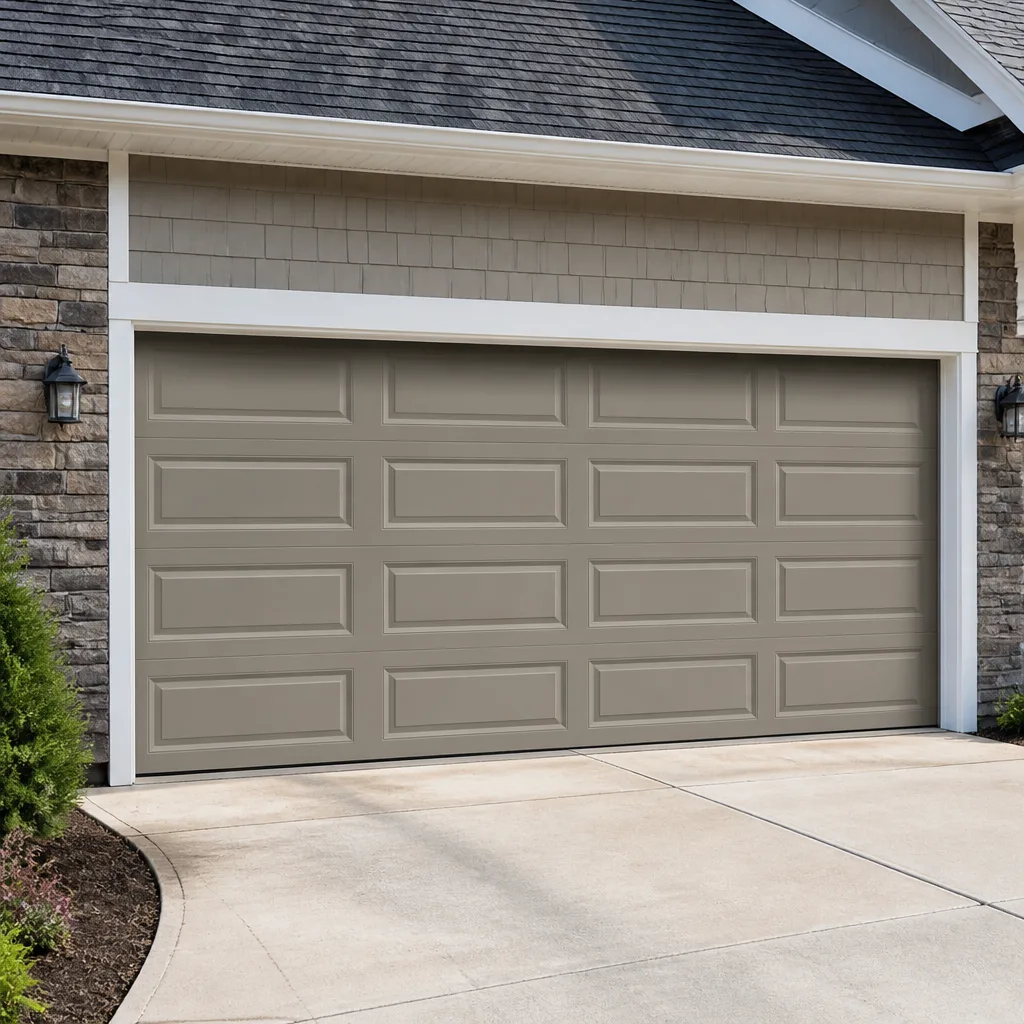 Raised-panel steel
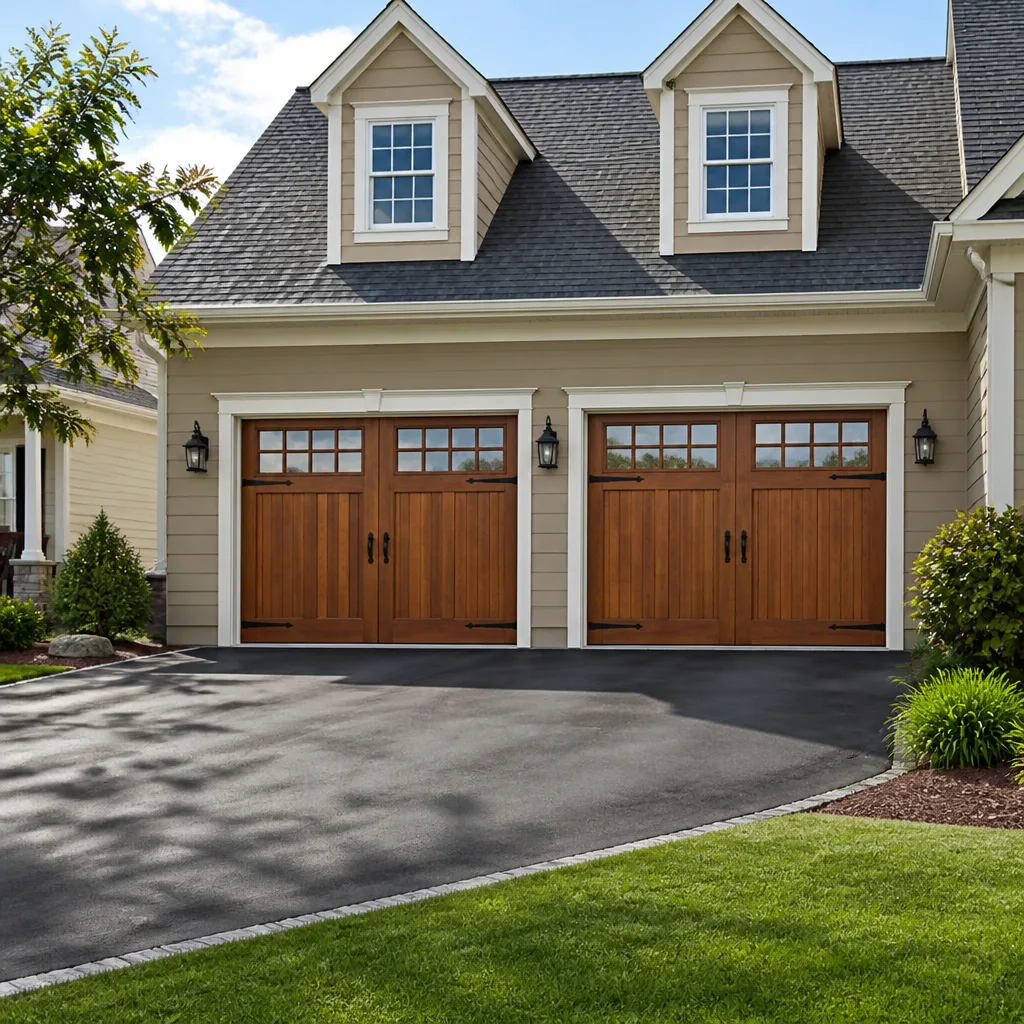 Carriage house
 Modern flush
 Full-view glass
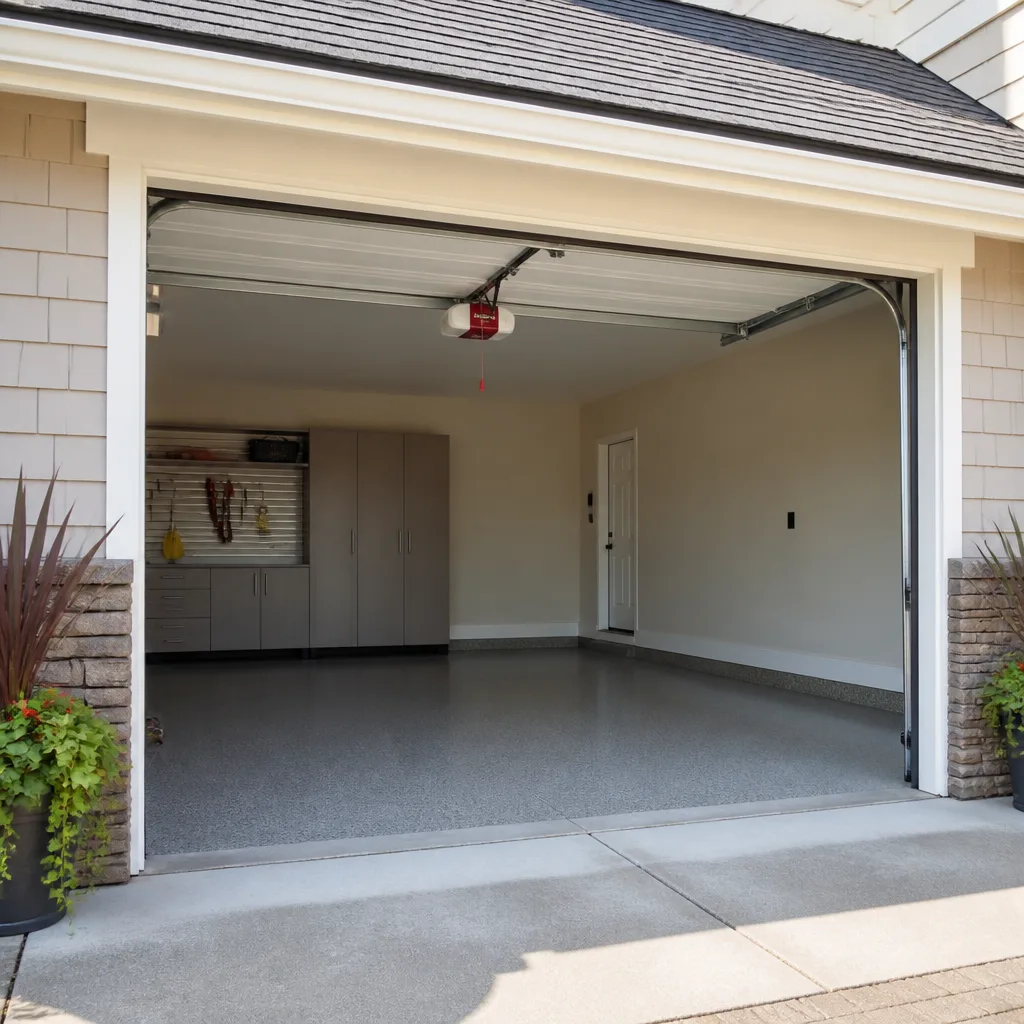 LiftMaster openers
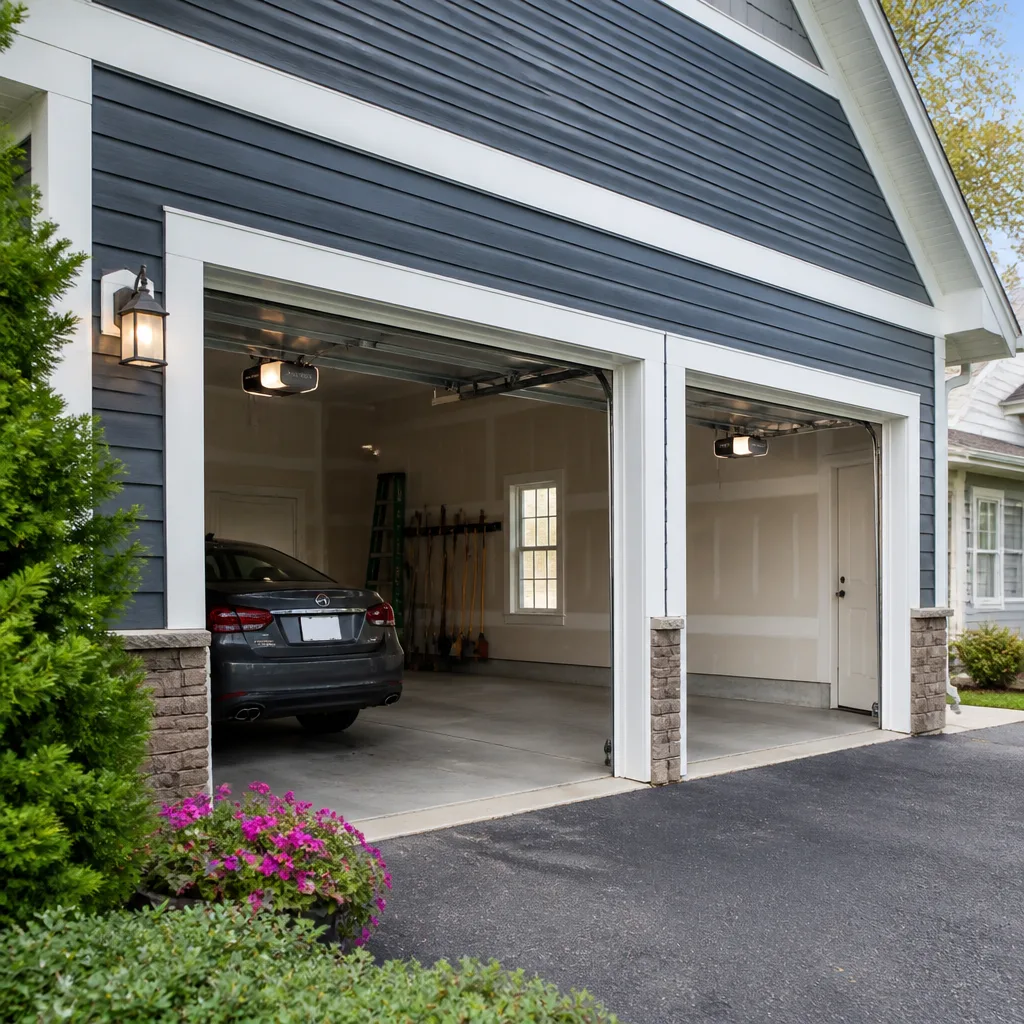 Chamberlain openers
Full 25-point door and opener safety check with every visit - springs, cables, rollers, tracks, and your LiftMaster or Chamberlain opener included
You get a price before we start. It does not change when the pro arrives.
Get your free estimateDIY vs Professional Garage Door: The Boulder Homeowner’s Decision Guide
A torsion spring under full tension can throw a winding bar hard enough to punch through drywall. That single fact explains a lot. YouTube is full of spring replacement videos, and the people making them are the ones who got lucky. The unlucky ones are in the emergency room, not on camera. Most homeowners frame this as a budget question: can I save money doing it myself? Here in Boulder the better framing is risk: which jobs carry near-zero risk and are genuinely fine to do yourself, and which involve stored mechanical energy that can hurt you no matter how careful you are. This guide draws that line precisely, without hedging.
Quick Answer
In Boulder, roughly 60 to 70 percent of the routine maintenance tasks on a garage door are safe for a prepared homeowner: lubrication, photo-eye sensor alignment, remote reprogramming, and weather seal replacement. Spring, cable, and track work hold stored tension that releases without warning, and those are professional jobs even if you’re handy, regardless of how many videos you’ve watched. The full breakdown of where the line falls, and how to recognize when a “safe” project has quietly turned into a dangerous one, is below.
Styles & brands we work with
- Raised-panel steel
- Carriage house
- Modern flush
- Full-view glass
- LiftMaster openers
- Chamberlain openers
Table of Contents
- How to Tell DIY Garage Door Tasks From Professional Ones
- DIY-Safe Garage Door Tasks: What You Can Genuinely Do Yourself
- Professional-Only Garage Door Tasks and Why the Line Doesn’t Move
- The Boulder Climate Factor: Why Cold Weather Changes the DIY Equation
- The Real Cost of DIY vs a Professional in Boulder
- When a DIY Project Turns Into a Professional Call
- Tools and Parts Sourcing for Boulder DIY Projects
- Which Garage Door Symptoms Signal Stop Immediately
How to Tell DIY Garage Door Tasks From Professional Ones
The line between DIY and professional garage door work isn’t about skill. It’s about stored energy. If you can do the job standing flat-footed with the door in its resting position and nothing spring-loaded over your head, it’s probably safe. If the door has to be raised, held, or tensioned to start the job, it’s professional territory. That’s the whole framework. Everything else is detail.
A useful second test: how many failure modes does the job have? Replacing a weather seal has one. Replacing a torsion spring has a dozen – the spring, the winding bars, the cables, the drums, the door position, and the exact number of quarter-turns on each side. One mistake on a spring can cause the door to slam or throw parts, while one mistake on a weather seal costs you a strip of rubber and fifteen minutes.
Here’s how to sort any task into one of three buckets:
- Green – genuinely DIY: the door stays in its resting position, no tension is released or adjusted, and the worst-case outcome is a door that doesn’t close and a wasted Saturday.
- Yellow – call and ask: you’re technically capable but the task touches balance, alignment, or an opener’s internal logic. Ask a specialist first; it may be cheap to hand off.
- Red – never DIY: torsion springs, extension springs, cables, drums, and track work under load. Stored energy means a wrong move doesn’t just waste time – it can injure you.
In our experience watching Boulder homeowners describe what they’re planning, the classification error almost always runs the same way: people underestimate springs and overestimate how hard opener work is. Many opener problems are cleared in a single service call, and DIY debugging rarely finds them. If the opener’s the issue, garage door opener repair is where we spend most of our diagnostic time.
DIY-Safe Garage Door Tasks: What You Can Genuinely Do Yourself
These tasks are forgiving, low-risk, and don’t involve stored tension. A prepared homeowner with a step stool, a socket set, and some patience can handle all four without calling anyone.
Lubrication
A noisy door is often just a dry door. The standard approach is a garage-door-specific lubricant applied to hinges, rollers, and the torsion spring, plus a wipe-down of the tracks – not a spray of WD-40 into the tracks themselves, which attracts dust and makes things worse. Once or twice a year is plenty. If you’re here in Boulder and the noise got worse over winter rather than better after a lube, that’s a signal the issue is component wear, not dryness.
Photo-Eye Sensor Alignment
If your door closes a few inches and reverses, or won’t close at all, one of the small sensors on either side of the opening is probably misaligned or blocked. Sight down the line between the two sensors – most models have a blinking LED that tells you the status. Nudge one until the light stops blinking, then test the door. This is a five-minute fix and shouldn’t require a service call unless it keeps coming back.
Remote Reprogramming
New opener, new remote, or a remote that stopped working after a dead battery, and reprogramming is almost always doable from your owner’s manual. LiftMaster and Genie both have walk-through instructions. The common gotcha is a Craftsman-era opener that uses a different pairing sequence than a current smart-home opener; if the manual’s steps don’t work, the brand matters more than the procedure. We’re a multi-brand operation and get calls about this every week – it’s a five-minute fix if you know the model and frustrating if you don’t.
Weather Seal Replacement
A cracking bottom seal lets in air, water, and occasionally small animals. Replacement is a slip-on or screw-on job on most doors, using a rubber or vinyl strip sized to your door. Nothing on this task is under load, so a homeowner on a step stool can do it in under an hour. If the seal is shot because the door is out of balance or rubbing on one side, though, replacing the seal means you’ll do it again next year – the underlying problem needs to be diagnosed.
Professional-Only Garage Door Tasks and Why the Line Doesn’t Move
Torsion and extension springs, cables, drums, and track work under load all sit on the red side of the line, and there’s no version of “if you’re careful” that changes it. A torsion spring under tension holds enough energy to break bones or kill, and the failure is instantaneous. That’s not a scare tactic; it’s why this work calls for trained hands, proper winding bars, and a second person – none of which most homeowners have. garage door spring repair is a dedicated specialty for us because the work is genuinely different from any other garage door job.
What gets misclassified:
- Torsion spring replacement. The spring is wound to a specific number of turns, the door has to be balanced, and the winding bars are the only thing between you and the stored energy. Homeowners who try this and get hurt aren’t being reckless – they’re underestimating how much energy is sitting in that spring.
- Extension spring work. Common on older doors, and the cables passing through the spring carry the same hazard. This is also a running the door to adjust type of job, and that part alone is where people get hurt.
- Cable replacement. Cables stretch and snap under tension and can whip across the garage. A cable that’s come loose means the door can drop without warning. Professional only.
- Track realignment under load. A single bent section of track with the door bearing weight on it is a physical hazard. Realignment means supporting the door, checking the panels, and taking the tension off first – a domino chain homeowners shouldn’t start alone.
- Panel replacement on a working door. Sounds like a swap, but the panel carries the door’s weight and the spring tension is tuned to that weight. Panel work without care can unbalance the whole system.
Track work and cable issues get a bad rap for feeling like alignment problems, but in our experience most of them start as something else – worn rollers, a damaged spring, an opener that’s been fighting a misaligned door for months. General garage door repair covers those diagnoses and the fix in one visit.
The Boulder Climate Factor: Why Cold Weather Changes the DIY Equation
Boulder garages get cold. Most aren’t insulated to the same standard as the rest of the house, and a lot of the housing stock – the older brick homes in the Mapleton Hill area, the long-standing detached garages scattered through Martin Acres and Table Mesa – has an unheated accessory structure that drops to whatever the overnight low is. Working in a 20°F garage isn’t the same as working in a 60°F one. Tools get harder to grip. Lubricant gets thicker and doesn’t spread the way it does in summer. Your hands stop working as well faster than you think, and that turns a “careful ten-minute job” into a “rushed ten-minute job.”
Three specific things shift in cold weather:
1. Lubricant behavior. Garage-door-specific grease and lubricant thickens in the cold. If you lube in February, the grease can stay clumped in the joints instead of spreading. The results show up as a door that feels sticky for weeks. When temperatures drop below about 40°F, wait for a warmer stretch rather than fighting it. If your door keeps slowing down in cold weather even after a lube, the rollers or spring have more of a say than you think.
2. Material contraction. Cold causes metal tracks and door panels to contract. Small gaps that look snug in July look wider in January, and doors that ran quietly in September can bind on one side in December. In Boulder, where the temperature swings between nights in the teens and days in the 40s through winter, this expansion and contraction is a real seasonal pattern – and it’s why a problem that “fixed itself” in spring often comes back the next winter.
3. Rushed decisions. This is the one that actually hurts people. When you’re cold, uncomfortable, and ready to be done, the correct number of quarter-turns on a spring turns into “close enough.” That’s not a skill problem; that’s a judgment problem, and no amount of watching videos fixes it. If you’re working on any garage door component and you’re cold enough that you’re rushing, that’s the point to stop and call.
A quieter cold-weather risk: the salt and grit on Boulder streets in winter works its way onto the door and track and into the bottom seal. Grit in the track makes the rollers bind, which loads the opener and the springs. A January track wipe-down is one of the best low-cost DIY habits for a Boulder garage.
The Real Cost of DIY vs a Professional in Boulder
The DIY-versus-professional cost comparison is almost always framed wrong. The question isn’t “what does a pro charge.” It’s “what does a pro charge versus what a botched DIY attempt costs when it has to be undone first.” When a homeowner starts a spring replacement, gets halfway, and calls, the bill is higher than a clean job – the tech has to reset whatever’s been started before the actual repair begins. That’s not punishment; it’s the labor of undoing.
Here are the typical cost ranges we see for garage door work in the Boulder market, all of them estimated per job, with the written estimate setting the final price:
- Free – our estimate, in-home or by description. No charge to be quoted.
- $95 – $185 – a service call and diagnosis, including minor adjustments and lubrication on a standard residential door.
- $180 – $340 – one torsion spring replacement, as a single spring (pairs run roughly double).
- $150 – $475 – opener repair, depending on the fault (board, motor, gear, safety sensor replacement).
- $225 – $450 – cable replacement, single side or both, plus balance and adjustment.
- $350 – $900 – track straightening or realignment and related component work on a misaligned door.
- $1,200 – $3,500 – replacement door installation, panel through full door, brand and insulation dependent.
- Botched DIY – anywhere from one to three times the clean-repair cost, because the technician’s first hour is undoing before fixing.
What tilts the math further: the warranty. Most quality doors from Clopay, Amarr, or Wayne Dalton come with a manufacturer warranty tied to professional installation. A door that was DIY-installed or DIY-modified after the fact can lose coverage. The same goes for opener brands – LiftMaster and Chamberlain have warranty conditions that assume a professional install. If your door is still under a warranty, the DIY savings are often smaller than they look because you may be spending down the warranty value.
For anything beyond a lubrication or seal job, call us and get the number instead of guessing at it. Boulder Garage Door Repair Pros gives free estimates, and knowing the real number is the easiest way to decide.
When a DIY Project Turns Into a Professional Call
This is the section most guides skip. Most “DIY-safe” tasks stay safe if you follow the plan. But a subset of them have a moment where the project changes – and it changes from “I’m finishing up” to “I need help now” fast. Here’s how to recognize it:
- The door feels heavy or won’t hold position. If you can’t stop the door halfway and have it stay there, the spring is out of balance. Stop. Don’t try to fix it once the door is off the ground.
- You see a gap or kink in a cable. Cables that show kinks, fraying, or loose strands mean a snap is possible. Get the door down, then call. Don’t operate it while you’re checking it.
- A spring has visibly broken. A gap in the coil is the sign. Don’t raise the door – the opener will fight a door it can’t handle and the risk goes up with every cycle.
- The door has dropped or gone crooked on one side while you’re working. Stop. Whatever’s holding it may be the only thing between you and a falling door.
- You’re cold and rushing. Go back inside. A garage door is not urgent enough to finish in 20°F with numb hands.
- The manual doesn’t match what you’re looking at. Different brand, different model, different era – even within the same brand, a Craftsman opener doesn’t behave the same as a LiftMaster. Wrong procedures are how damage starts.
We see Boulder homeowners at each of these points, and the ones who stopped early had the shortest and cheapest visits. If the door feels wrong at any point, it’s fine to call it. We’d rather see you with a door that still works than one that’s halfway apart.
Tools and Parts Sourcing for Boulder DIY Projects
For the tasks that are genuinely DIY, sourcing parts well matters more than people think. Two things happen when homeowners cheap out: the part fails faster, and the failure looks like a different problem, which makes diagnosis harder. Here’s how to think about it in Boulder.
What to buy from a garage door specialist, not a big-box store:
- Weather seals. Big-box seals are often thinner gauge and split within a single season. The specialist-grade seal costs a few dollars more and last years.
- Rollers. Nylon 13-ball rollers from a door supplier outlast the generic rollers found in big-box kits by a wide margin. Cheaper rollers wear flat and start making noise in a few months.
- Garage-door-specific lubricant. Genie sells an appropriate product, and most local door specialists stock an equivalent. Don’t substitute general-purpose grease or WD-40 in the tracks.
- Replacement remotes. Match the opener model to the remote. LiftMaster and Chamberlain remotes use specific pairing tech; a universal remote will work but sometimes loses features. If the opener is an older Craftsman, the specialty supplier is your best bet.
What big-box stores are genuinely fine for: step stools, socket sets, screwdrivers, a shop vacuum, work gloves. These are the tools that make the job go, and any hardware store in town has them.
Local stock is real in Boulder – garage door suppliers in the area carry the parts above, and the counter staff can usually identify a part from a photo. If you’re not sure what model of door or opener you have, take a photo of both the door label and the opener label. Boulder hardware stores and garage door suppliers both usually accept that as enough to identify the part.
One thing to be careful of: don’t buy spring or cable components on the assumption you’ll install them yourself. A spring sold to a homeowner without a matching install is a stored battery. Springs need to be set to a specific door weight and a specific number of turns, and the wrong match is more dangerous than a worn original. If the spring needs replacement, the right answer is the service call, not the part. That’s garage door spring repair territory, and it stays there.
Which Garage Door Symptoms Signal Stop Immediately
Some symptoms are worth watching. Others mean stop what you’re doing and call. In our experience, the second group is smaller than people realize but the mistakes are costlier. Here’s how to tell.
Stop immediately and call
- A loud bang from the spring area, followed by the door no longer opening under its own power. That’s a broken spring, and the door is now bearing weight that only the spring handles.
- A cable that’s visibly loose, kinked, or wrapped around the drum. A cable under tension can whip. Don’t operate the door.
- A door that’s hanging crooked or has fallen on one side. Don’t lift it. Call.
- The opener is running but the door isn’t moving, and you’ve checked the manual release. The opener is fighting the door and something is broken.
Watch and schedule
- Squealing or grinding on opening or closing. That’s usually rollers or a worn drive gear, not yet an emergency.
- Slow response or intermittent operation. Opener logic board or remote sync, usually repairable at a scheduled visit.
- The door reverses before it touches the ground. Sensor alignment or travel limits. DIY-friendly if it’s the sensors, professional if travel limits are genuinely off.
- Water or snow getting into the garage bottom edge. Weather seal. DIY-friendly.
If you’re unsure which side you fall on, the call itself costs nothing. We work on products from Genie, Clopay, Amarr, and Wayne Dalton as well as the rest, and getting a description over the phone usually tells us what the issue is before we arrive. For emergency situations – locked out, exposed, door not closing – we run emergency service as a standard tier. That’s not a premium upsell; it’s one of the things we do for a living. Call garage door repair when the door’s broken and you don’t know why, or get in touch with us directly at (855) 694-6347.
Common Mistakes to Avoid
- Spraying WD-40 in the tracks. It feels right and makes the door smooth for a week. Then dust collects on the residue, and the door gets worse.
- Buying a spring online and planning to install it. Springs have to match your door’s weight and be wound to a specific count. A spring that doesn’t match is more dangerous than the worn one you replaced.
- Working on the door at 20°F in an uninsulated garage. Cold hands, thick lubricant, and rushed decisions are a bad combination. Wait for a warmer day or call.
- Assuming the opener can lift a misaligned door. The opener isn’t designed to correct a door that’s out of balance. Running it while the door is fighting back wears the opener and can break it – that transforms a $300 fix into a bigger one.
- Adjusting track or spring with the door in the up position. A raised door can come down without the spring doing its job. Never work with the door overhead.
- Reprogramming a remote on the wrong opener model. The steps differ between Craftsman-era and current LiftMaster or Chamberlain openers. If the manual’s steps don’t work, the model is the issue, not your ability.
- Patching a symptom instead of diagnosing it. A closing door that reverses, a door that binds on one side, or a noisy opener all point to something upstream. Fix the symptom and the real problem gets more expensive to undo later.
See the difference
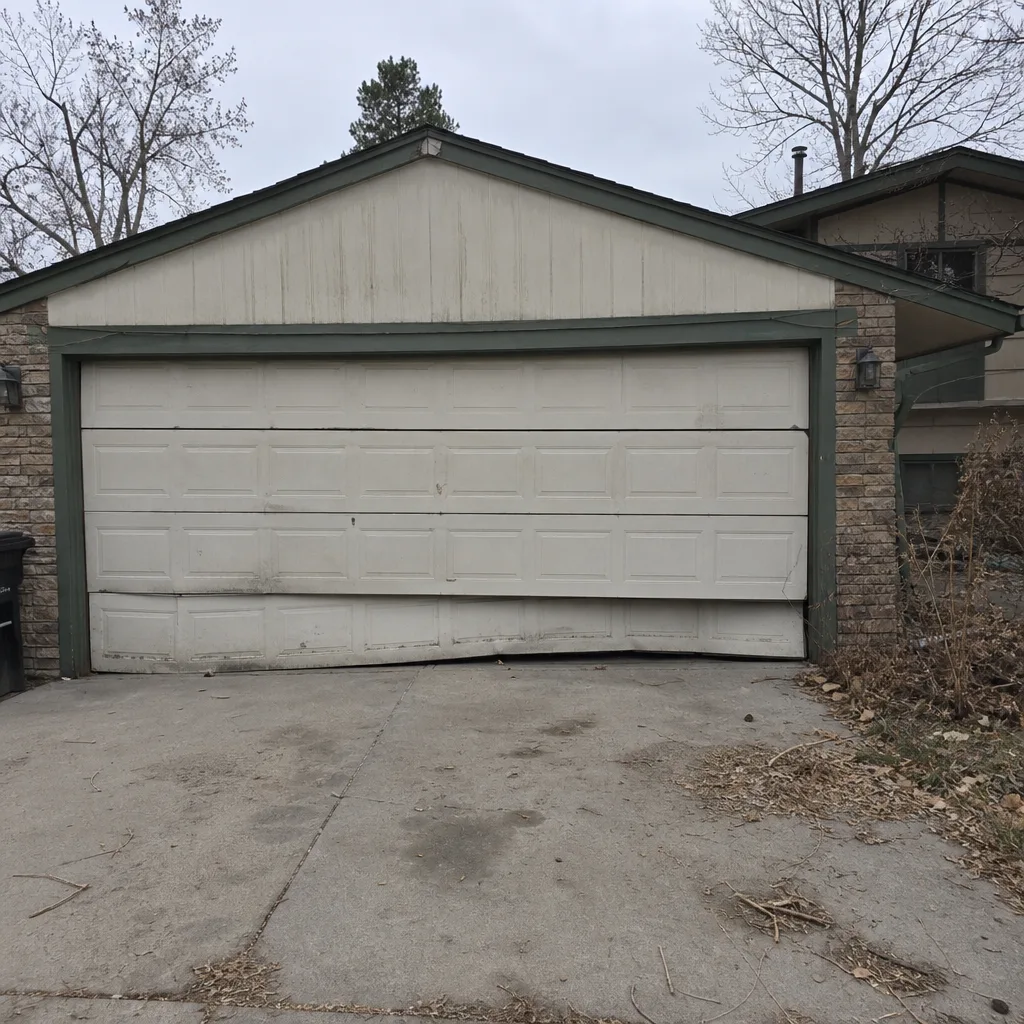 Before
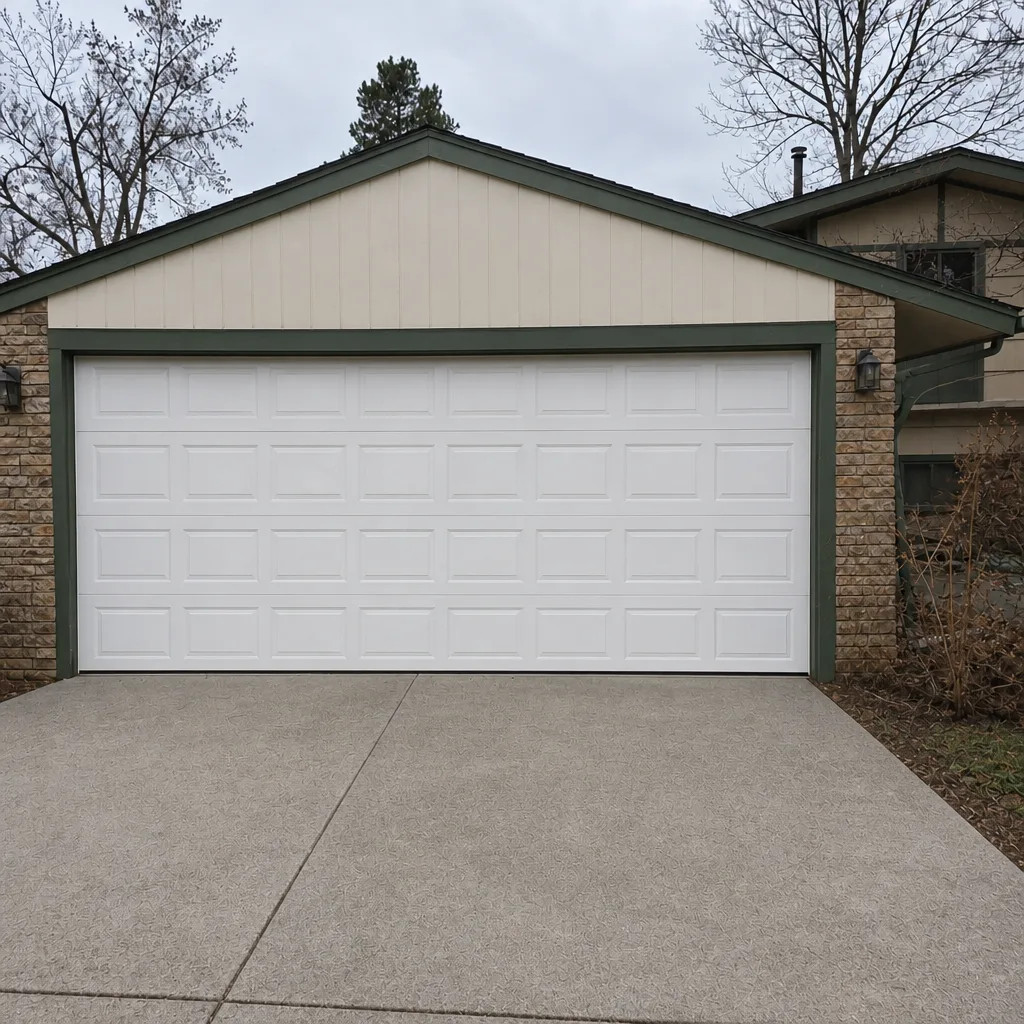 After
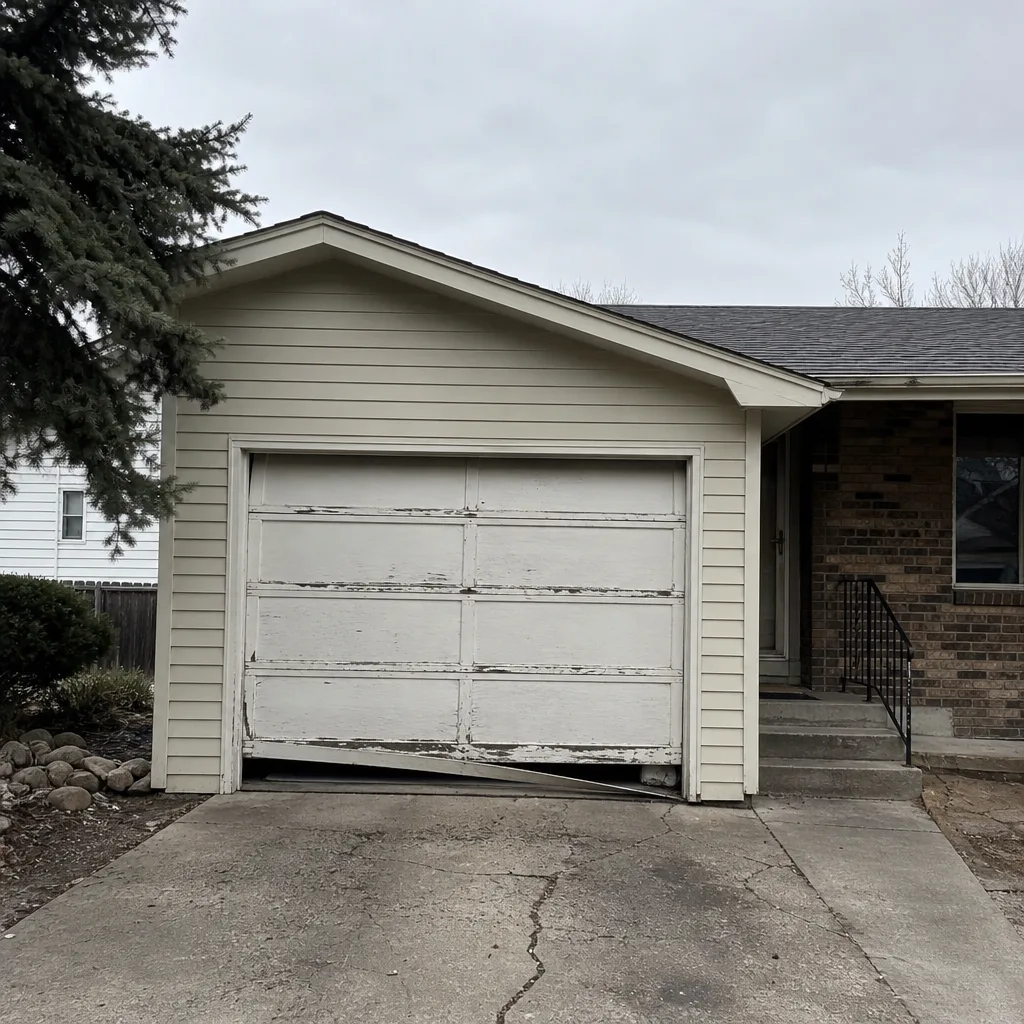 Before
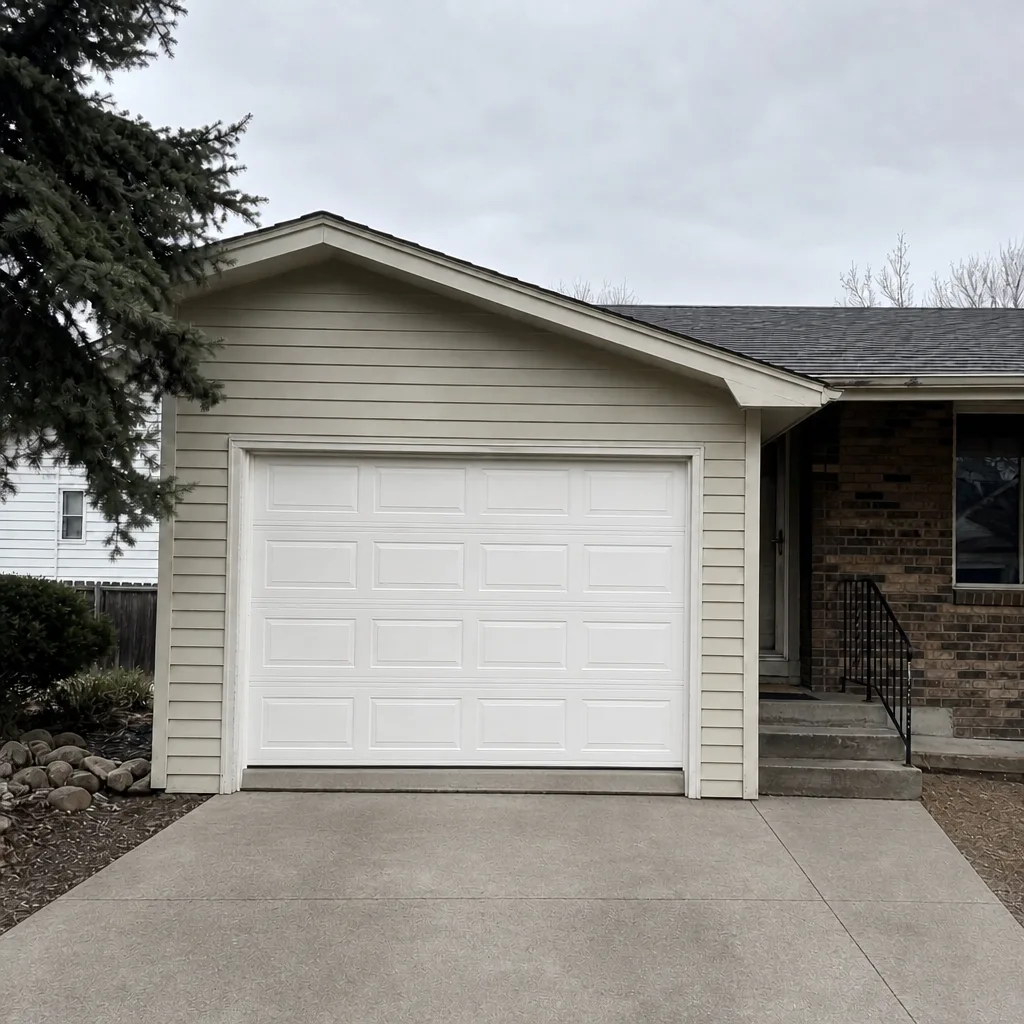 After
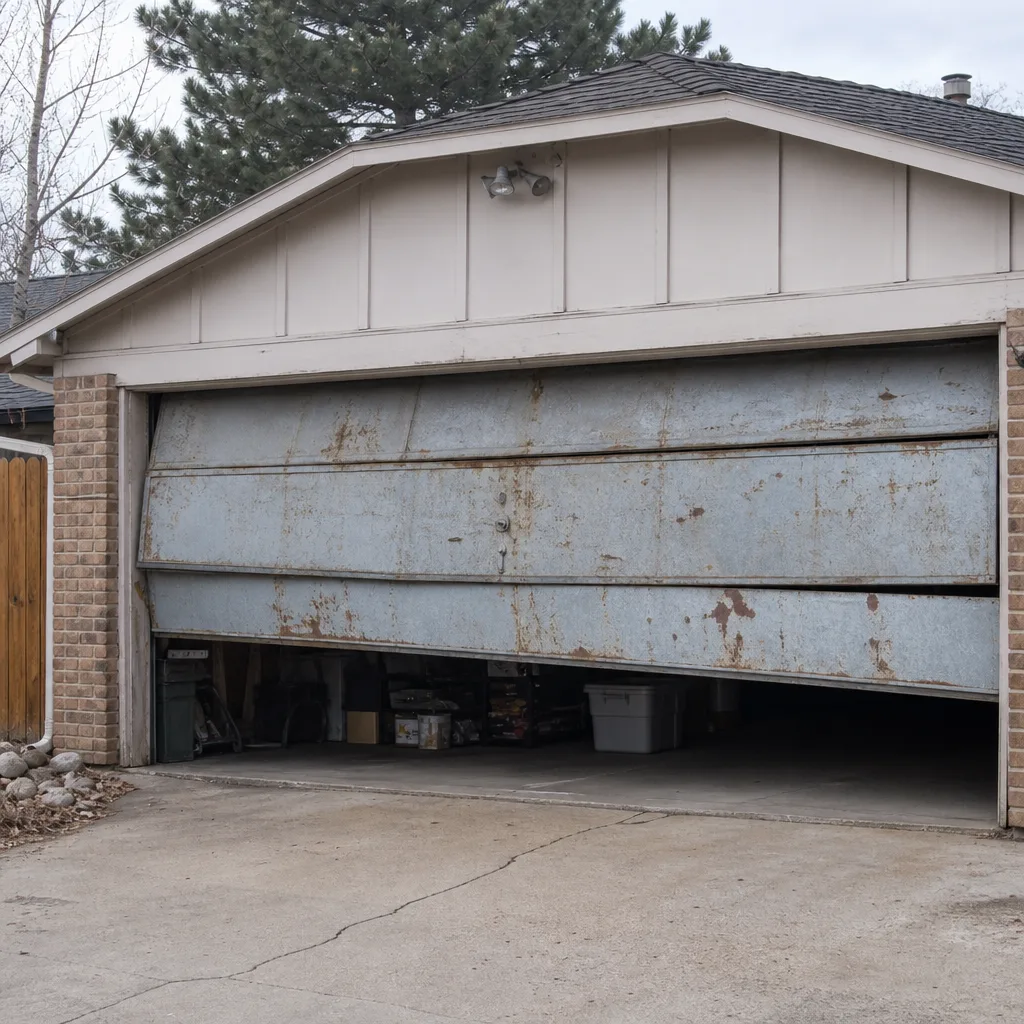 Before
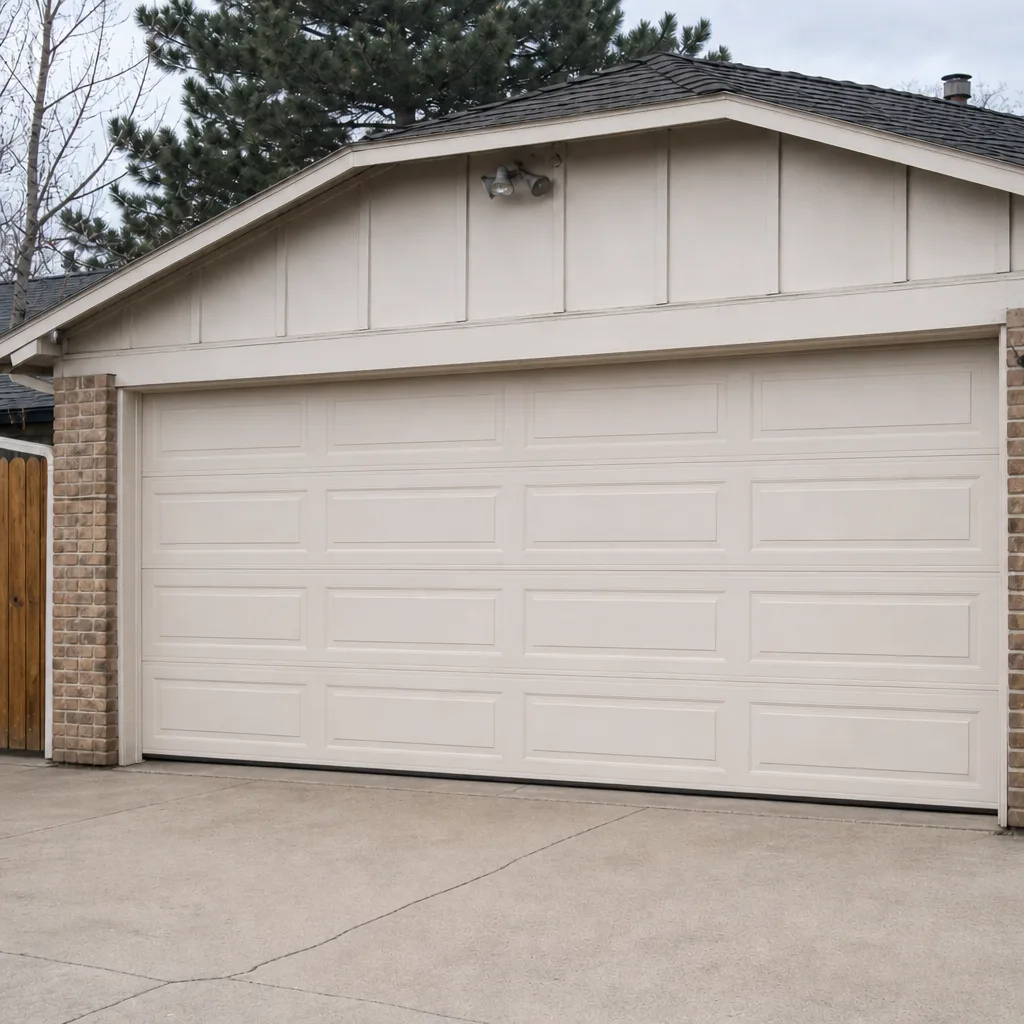 After
When to Call a Professional
Call a professional for any spring, cable, drum, or track work on a garage door – even if the door is currently working. Call for a panel that’s been hit or damaged, for a door that’s dropped on one side, or for an opener that’s running but not moving the door correctly. Call when a DIY task has hit one of the stop signs above, and call when you’re cold enough that you’re rushing. Boulder Garage Door Repair Pros offers free estimates in Boulder – call (855) 694-6347. Our technicians have up to 11 years of experience, work on products from all eight major brands, and can usually tell you what’s wrong from a description over the phone, which means an estimate takes less time than you’d expect.
Frequently Asked Questions
No, and no amount of caution changes that. A torsion spring holds stored energy that releases without warning, and the winding bars have to be set and removed in a specific order. Homeowners who’ve done it successfully usually say the same thing: they wouldn’t do it again. The 11 years of technician experience our team brings to this job is not because we enjoy it; it’s because this job needs training and tools most garages don’t have. Call (855) 694-6347 for a quote before you take it on.
Typical Boulder estimates run $95 – $185 for a service call and diagnosis, $180 – $340 for a single torsion spring, $225 – $450 for cable replacement, and $150 – $475 for an opener repair depending on the fault. DIY materials are often a fraction of that, but they don’t include the diagnostic work or the warranty. When a DIY attempt has to be undone first, the bill usually runs higher than a clean professional job. Call (855) 694-6347 – estimates are free and the written estimate sets the final price.
Yes. We offer same-day service and emergency response as a standard service tier, not an add-on. If your door is locked out, stuck open, or exposed, call and we’ll get someone out as fast as we can. For repair calls the schedule usually moves quickly; for replacement work it’s scheduled around a measure. Call (855) 694-6347 and we’ll tell you what we can do.
No. The written estimate we give you is the price you’ll see on the invoice. The only time a number moves is if you add scope after the estimate – say, you asked about a spring and we find a bent track during the same visit – and then you get a new estimate before any extra work starts. The price is quoted and agreed before any work begins. Call (855) 694-6347 for an exact quote.
The local professional we connect you with is licensed and insured as Colorado requires. We connect you with independent local professionals who perform the work; every one of them carries the appropriate state licensing and insurance for the job. Our role is to route you to specialists who work on the major brands – LiftMaster, Chamberlain, Genie, Clopay, Amarr, Wayne Dalton, Craftsman, and Raynor – rather than a generalist. Call (855) 694-6347 with any questions about the arrangement.
Lubrication, photo-eye sensor alignment, remote reprogramming, and weather seal replacement are all genuinely DIY-safe. They don’t involve stored tension, the door stays in its resting position, and a failed attempt costs you time, not a trip to the emergency room. If any of these starts to feel like it’s fighting you – the door won’t stay balanced, or a sensor keeps drifting – stop and call. (855) 694-6347.
Most cities require a permit for a full door replacement, and the rules vary for opener replacements and structural changes. It’s worth calling Boulder’s building department before a replacement or a new install to confirm what’s required – the answer depends on the specific job, and a quick call beats getting surprised at inspection. For repair, spring, and cable work, permits aren’t typically required, but the specialty scope is what matters. Call (855) 694-6347 with questions about your specific project.
The Bottom Line
The DIY question has a cleaner answer than most guides suggest. Lubrication, sensor alignment, remote programming, and weather seal replacement are genuinely safe for a prepared homeowner. Spring, cable, and track work sit firmly on the professional side of the line, and no skill level makes them a good idea. Boulder’s cold garages change the risk math on the DIY side – cold hands, thick lubricant, and rushed decisions – so the best plan is to do the small jobs on a warm day and hand off the tension-loaded work. From a broken spring to a full new door, we work on the eight major brands, respond to emergencies as a standard tier, and give free estimates in Boulder. The right-the-first-time result is worth the call.
Written by the team at Boulder Garage Door Repair Pros.